
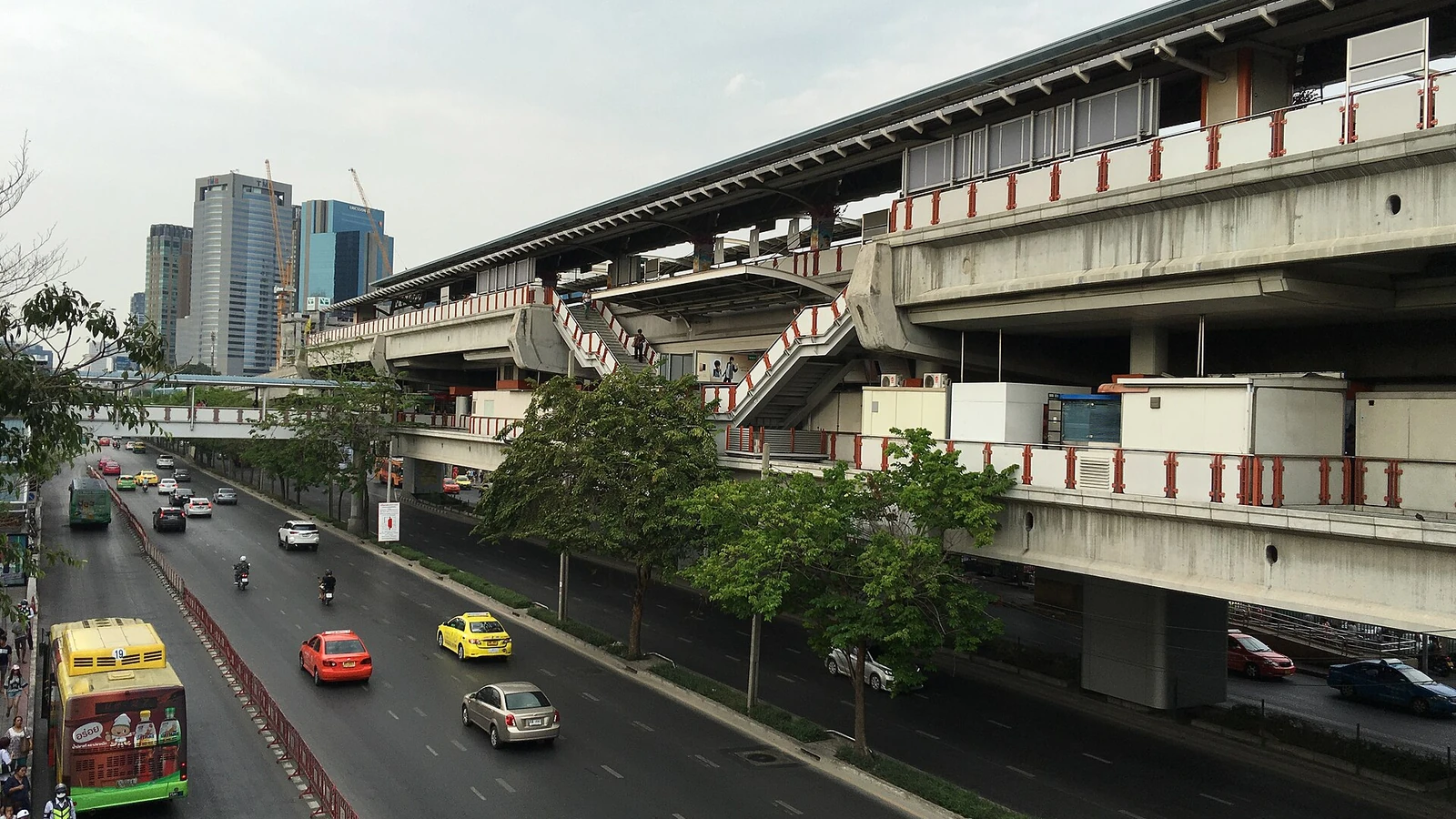
This decision comes after you have already chosen Sukhumvit. If you are still deciding the broad base, start with where to stay in Bangkok or the more specific Sukhumvit vs Siam comparison. Here, the neighborhood name is no longer the useful unit. The useful unit is the route from the station exit to the hotel door.
A hotel can be correctly marketed as “Phrom Phong,” “Thong Lo” or “Sukhumvit” and still create a repeated first-and-last-mile journey. That is not automatically bad. Deeper sois can deliver quieter surroundings, larger rooms or more residential-feeling stays. The question is whether you are buying an upgrade or accidentally buying a commute.
Count hotel journeys, not sightseeing stops
Before comparing room sizes, count how often you will cross the hotel threshold on an ordinary day. The farther hotel becomes expensive in time when the route repeats.
The near-BTS premium buys optionality, not just shorter walks
A station-near hotel is most valuable when your Bangkok days are not fully scripted. You can come back to the room between neighborhoods, drop shopping bags, change after rain, rest before dinner or abandon a plan without creating another transport decision.
That is why a near-station room can outperform a nominally “better” hotel even when the deeper property has more square metres or a nicer pool. You are paying for the ability to use the room spontaneously.
The logic is strongest around transport-heavy bases. In Asok vs Phrom Phong, direct MRT access is a meaningful advantage only if the hotel preserves it. A property far down a side street can turn a good rail neighborhood into a first-and-last-mile problem. The same warning applies after choosing Phrom Phong vs Thong Lo: the neighborhood label cannot tell you how the last 700 metres will feel.
Direct access can be a real hotel feature
Hyatt Regency Bangkok Sukhumvit currently states that it has direct access to Nana BTS and is connected to the station by skybridge. That is an unusually strong version of “near BTS”: the transport advantage is part of the property itself rather than a map estimate.
You do not need this level of connection for the location to be worthwhile. The point is to distinguish verified door-to-station convenience from a booking-page neighborhood tag.
A shuttle can make distance manageable — on its clock
Marriott Executive Apartments Sukhumvit Park currently runs a complimentary tuk-tuk shuttle to and from BTS Phrom Phong. Marriott publishes service from 06:00 to 22:30, with frequencies that vary during the day.
That can turn a farther property into a sensible choice, especially for longer apartment-style stays. But the shuttle schedule becomes part of your hotel policy, just like breakfast hours or check-out time.
Do not compare “800 metres” with “800 metres” as if every Bangkok walk were equal
Map distance alone misses the things that make a short route annoying: narrow pavement, driveway crossings, heat, construction, standing water after heavy rain, luggage, shopping bags and the fact that you may walk the same route several times.
For most first-time visitors, a useful booking check is not “Is this walkable?” but “Would I still choose to walk it at 10:45 p.m. after dinner, or at 2 p.m. carrying shopping?” If the answer is no, price the hotel as if some of those journeys will be rides.
Shopping-heavy travelers should apply this especially strictly. The Siam vs Pratunam guide explains why bag-drop convenience can change the value of a base. The same logic exists inside Sukhumvit: the ability to put down purchases and leave again can be more useful than an extra few square metres of room.
A deep-soi stay runs on two clocks
BTS currently publishes system service hours of 05:00 to 01:00, effective from 1 January 2026, while individual first and last trains vary by station and direction. Hotel shuttles can stop earlier.
That gap is why a shuttle should be treated as a scheduled amenity, not as a substitute for location. The farther hotel can still win; you simply need to decide whether the room advantage survives the transport reality.
When the deep-soi hotel is the smarter booking
You will genuinely use the room moreA larger apartment, kitchen, laundry setup, balcony or quieter work environment can matter more on a week-long stay than shaving minutes from every train journey. This is especially true when your day is not built around rapid sightseeing.
The shuttle matches your actual hoursIf you normally leave after breakfast, return before dinner and are happy using a ride later at night, a published shuttle can remove the most repetitive inconvenience.
Your evenings happen near the hotelA deeper Thong Lo or Phrom Phong property can make sense when restaurants, friends, work or wellness appointments are already concentrated nearby. In that case, the BTS is not the beginning and end of every day.
The hotel itself is part of the tripIf you chose the property for a pool, spa, residence facilities or a quieter residential rhythm, then spending more time there is not wasted sightseeing time. Compare this logic with Riverside vs Sukhumvit, where hotel-time value can legitimately outweigh maximum transport flexibility.
The rain test catches bad location bargains quickly
Imagine a sudden shower begins just as you reach the BTS after a full day out. Which version of the hotel still sounds appealing?
- Near BTS: a short, familiar final segment; some properties have direct or partially covered connections.
- Deep soi with shuttle running: workable if the pickup point is clear and the next vehicle is not far away.
- Deep soi after shuttle hours: you are deciding between a wet walk and arranging a car for a journey that looked trivial on the booking map.
If your answer changes as soon as rain is added, you probably value location more than the room photos suggested.
Ride-hailing is a useful fallback, but it does not make location irrelevant
Grab currently lists Bangkok among its GrabCar and JustGrab service areas, and its app supports exact pickup and drop-off points. That is useful for a deep-soi hotel, especially late at night or with luggage.
But “I can always get a Grab” is not the same as “the location has no cost.” Every ride adds another request, pickup wait and traffic-dependent segment. On a four-night first trip, that may be completely acceptable once or twice. It becomes a different stay when it happens every morning and every night.
The same principle matters when airport plans are tight. If you are still deciding which Bangkok airport fits the itinerary, use the BKK vs DMK guide. Do not choose a deep-soi hotel because it looks vaguely “closer to the airport” on a map; the repeated city journeys usually matter more than one transfer unless your arrival is extremely late or departure extremely early.
Solo women: inspect the final 300 metres separately from the neighborhood
There is no useful city-wide rule that a deep soi is automatically unsafe or a main road automatically comfortable. Check the exact route you would use after dark.
- Locate the hotel entrance, not just the property pin.
- See whether the route is on a busy through-road or turns onto a quieter lane.
- Confirm where a hotel shuttle actually drops you and whether that pickup point is easy to identify at night.
- If you expect to return after the shuttle ends, make sure you are comfortable using a taxi or ride-hail rather than treating the walk as compulsory.
- With luggage, do not assume a route you would happily walk in trainers is equally pleasant with a suitcase.
If this after-dark micro-location matters more to you than the difference between two Sukhumvit districts, that is useful information. You may not need another area comparison at all.
Choose the hotel you will use, not the room you admire at booking time
For three or four nights of first-trip sightseeing, a hotel near the BTS is usually the stronger purchase because the advantage repeats every time you leave, return, change clothes, drop bags or abandon a plan. A deep-soi hotel becomes the better decision when its extra space, quiet, facilities or apartment setup will be used often enough to compensate for the last mile.
If your Bangkok trip is mainly temples and historic neighborhoods, the larger question may still be Siam vs Old Town. If park access and MRT connections matter more, compare Siam vs Silom. And if Bangkok is only the first stop before northern Thailand, the Bangkok to Chiang Mai sleeper vs flight decision may affect which final-night hotel location is practical.
The booking rule is simple: if the better room is farther from the BTS, name the exact feature you are gaining and the exact hours you will use it. If you cannot, choose the easier station walk.
BTS SkyTrain, current timetable and first/last-train information: bts.co.th · Hyatt Regency Bangkok Sukhumvit, current Nana BTS direct-access information: hyatt.com · Marriott Executive Apartments Sukhumvit Park, Bangkok, current Phrom Phong tuk-tuk shuttle schedule: marriott.com · Staybridge Suites Bangkok Thonglor, current local-shuttle information: ihg.com · Grab Thailand, current Bangkok ride coverage and pickup/drop-off functionality: grab.com.
Hotel shuttles and transport operating details can change. Recheck your chosen hotel's current schedule before travel. For more Bangkok decisions, browse the Bangkok hub, Stay guides or Transport guides.
Hotel booking options
See what the same stay looks like across major OTAs
Availability and room conditions can vary between platforms. Compare the exact room type and cancellation terms rather than assuming the first listing is equivalent.
Affiliate links are routed through Stay22. Do Thailand may earn a commission at no extra cost to you.