
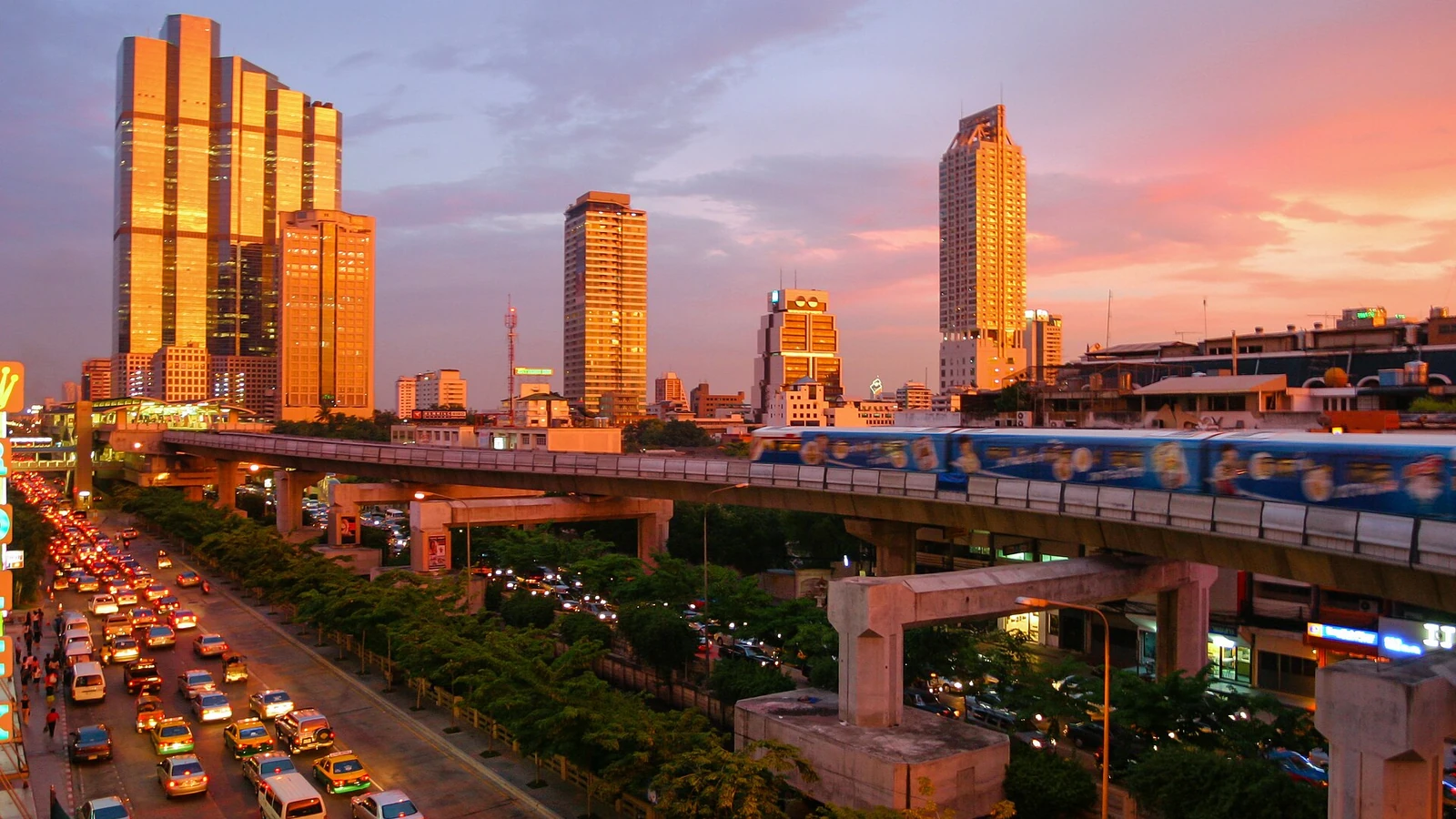
This is not really a contest between “modern Bangkok” and “historic Bangkok.” It is a decision about which hours you want your hotel to protect.
Siam protects the messy middle of a first trip: shopping, rain changes, BTS journeys, an unplanned dinner and the afternoon when you decide you are too tired to cross the city again. Old Town protects the edges of a sightseeing day: getting to major temples before the heat builds, returning to the hotel without a cross-city journey, and seeing the river-and-temple district after day visitors have started to thin out.
If you have not narrowed Bangkok down this far, start with Where to Stay in Bangkok. This page is for travelers who already understand Siam's convenience and are wondering whether sleeping closer to the historic core is worth the trade.
Start with 8:30 am, not with a neighborhood mood board
The Grand Palace's current visitor information lists opening from 8:30 am, with ticket sales ending at 3:30 pm, and its official schedule warns that royal events can change access on particular dates. Wat Pho's current official visitor information also places it directly beside the Grand Palace area and lists long daily visitor hours.
That gives Old Town a very specific advantage: it can turn a major sightseeing morning into a walk or short local hop rather than the first cross-city movement of the day.
You can already be near the palace-and-temple cluster while a Siam guest is beginning the city transfer.
When heat, rain or fatigue changes the plan, Siam gives you more indoor fallbacks and easier onward movement.
Old Town can feel beautifully atmospheric if you chose the right micro-location. Siam is easier when you want a broad choice of late shopping, dining and rail-connected options without planning the evening.
If your temple list is one concentrated morning, do not move your whole stay for it. If you want two early heritage mornings, a river evening and time around the old streets without commuting back to the centre, the arithmetic changes.
Old Town is no longer shorthand for “no useful rail”
Outdated Bangkok advice often treats the historic core as disconnected from the metro. That is too simple now. Bangkok Expressway and Metro's current Blue Line includes Sam Yot (BL30) and Sanam Chai (BL31), immediately after Wat Mangkon in Chinatown.
Sanam Chai is the key station for the southern part of the historic core. A current Old Town hotel example, Riva Arun Bangkok, states that Sanam Chai MRT is about 250 metres away and that the Grand Palace, Wat Pho, Museum Siam, Flower Market and Maharaj area are within its surrounding sightseeing zone.
If you already know you want a central base with both BTS and MRT in your everyday orbit, compare Siam vs Silom. Silom is a much cleaner compromise than choosing Old Town while secretly wanting central-city transport every night.
Do not book “Old Town” until you choose which Old Town
The strongest temple-first version. It suits travelers who want Wat Pho, the Grand Palace side of the river, Museum Siam and river access to shape the stay. Check the exact walk to Sanam Chai MRT.
Better when your historic-Bangkok interest spreads east toward old commercial streets, markets and Chinatown connections. BEM's Sam Yot station information lists access toward Wat Suthat and surrounding old-city streets.
A different purchase again. You gain a more backpacker-and-nightlife-oriented evening environment, but you should not assume the same MRT convenience as a hotel near Sanam Chai or Sam Yot.
This is where many hotel comparisons go wrong. “Old Town” is not one transport product. Two hotels can both use a historic-Bangkok label while creating completely different late-evening walks and completely different dependence on taxis or ride-hailing.
For a solo trip, trace the final route from the nearest station or ride-hail drop-off to the lobby. The concern is not to label Old Town unsafe; it is to notice whether your particular hotel sits down a quiet lane, across a road you dislike crossing after dark, or beyond a walk that feels trivial on a map and annoying in heat or rain.
The temple-day advantage is mostly about recovery
Being close to the temples matters less because you save a headline number of minutes and more because you can use the hotel between activities.
Temple sightseeing in Bangkok often means conservative clothing, outdoor walking, shoes on and off, sun exposure and a lot of standing. The Grand Palace currently publishes a formal dress code, and Wat Pho also asks visitors to dress respectfully. For women, that makes a nearby room unusually useful: you can start appropriately dressed, return to shower or change, then go back out for a completely different evening.
This is also why a beautiful Old Town boutique hotel can justify itself even if Siam looks stronger on a network map. You are paying for the ability to use the room during the sightseeing day, not merely for a historic postal address.
Siam wins the trip once your interests become mixed
BTS currently identifies Siam as the interchange between its Sukhumvit and Silom lines. That matters when the trip spreads beyond the historic core: Chatuchak, central shopping, Sukhumvit dinners, massage appointments, cafés, museums and spontaneous changes all create different travel directions.
Siam is especially hard to beat on a three- or four-night first visit because you usually do not yet know which Bangkok plans will expand and which will be dropped. It gives uncertainty somewhere to go.
If shopping is likely to become more than an evening filler, use Siam vs Pratunam. If you want central convenience but more restaurant-and-nightlife depth, Sukhumvit vs Siam is the cleaner comparison. And if what attracts you to Old Town is actually river atmosphere rather than temple proximity, compare Siam vs Riverside before booking.
One hotel on each side shows what you are really buying
These are location examples, not ranked hotel recommendations.
Riva Arun Bangkok: its official location page describes a position among the Grand Palace, Wat Pho, Museum Siam and Flower Market, with Sanam Chai MRT about 250 metres away. That is the strong Old Town case: heritage sights are not merely “nearby attractions”; they become the hotel's immediate operating environment.
Siam Kempinski Hotel Bangkok: its current official location page describes direct covered access to Siam Paragon and BTS accessibility. That is the strong Siam case: central shopping, indoor fallback space and BTS-led movement are built into the hotel location.
The useful lesson is not to copy either hotel. Copy the relationship. In Old Town, pay for genuine walking access to the sights you will repeat and a sensible MRT or river connection. In Siam, pay for a clean route to the BTS and the indoor network you expect to use.
Who should actually choose Old Town?
- Choose Old Town if you have two temple or heritage mornings, care about being near the river after sightseeing hours and are happy to make central-Bangkok evenings more deliberate.
- Choose Old Town if the boutique hotel itself is part of the experience and you expect to return to it during the day.
- Choose Siam if this is a three-night first visit with a mixed wishlist and you do not want the hotel location to push the itinerary in one direction.
- Choose Siam if shopping, rain-proof options and last-minute dinner plans matter as much as temples.
- Choose Siam if you are traveling solo and know you prefer a very easy late-evening return with bright commercial surroundings and frequent rail use.
- Do not choose Old Town just to “feel more local.” That is too vague to compensate for transport friction. Choose it because specific hours of your trip become better.
Would a split stay solve it?
Usually not on a short first trip. Moving hotels costs packing time, check-out time and luggage handling, and the distance between Siam and Old Town is not large enough to justify a split merely for sightseeing.
A split can make sense on a longer Bangkok stay when the hotels themselves are intentionally different experiences — for example, two nights focused on the historic river district followed by several nights in central Bangkok. But for a standard three- or four-night visit, pick one base and use the city's transport network.
If flight timing is part of the decision, check BKK vs DMK before locking the hotel. Airport convenience should be a tie-breaker, not the reason you spend every sightseeing day in the wrong part of Bangkok.
The simplest booking test
Write down your first two mornings and your last two evenings.
If at least two of those four blocks are in the historic core, Old Town has a real case. If only one is, book Siam and visit Old Town rather than sleeping there.
Continue from the Bangkok destination hub, browse all stay guides, keep the transport hub open while checking hotel pins, or use our itinerary guides and all Do Thailand guides to build the rest of the trip.
Sources checked 9 August 2026: The Grand Palace — current visitor information and dress code; The Grand Palace — current schedule calendar; Wat Pho — current visitor information; Bangkok MRT/BEM — Sam Yot and Blue Line context; BTS SkyTrain — current network structure and Siam interchange; Riva Arun Bangkok — current Old Town location information; Siam Kempinski Hotel Bangkok — current location information.
Hotel booking options
Check the stay on the OTA you already use
The useful comparison is the same room for your actual dates—not a headline rate. Look at cancellation, breakfast, taxes and room category before deciding.
Affiliate links are routed through Stay22. Do Thailand may earn a commission at no extra cost to you.