
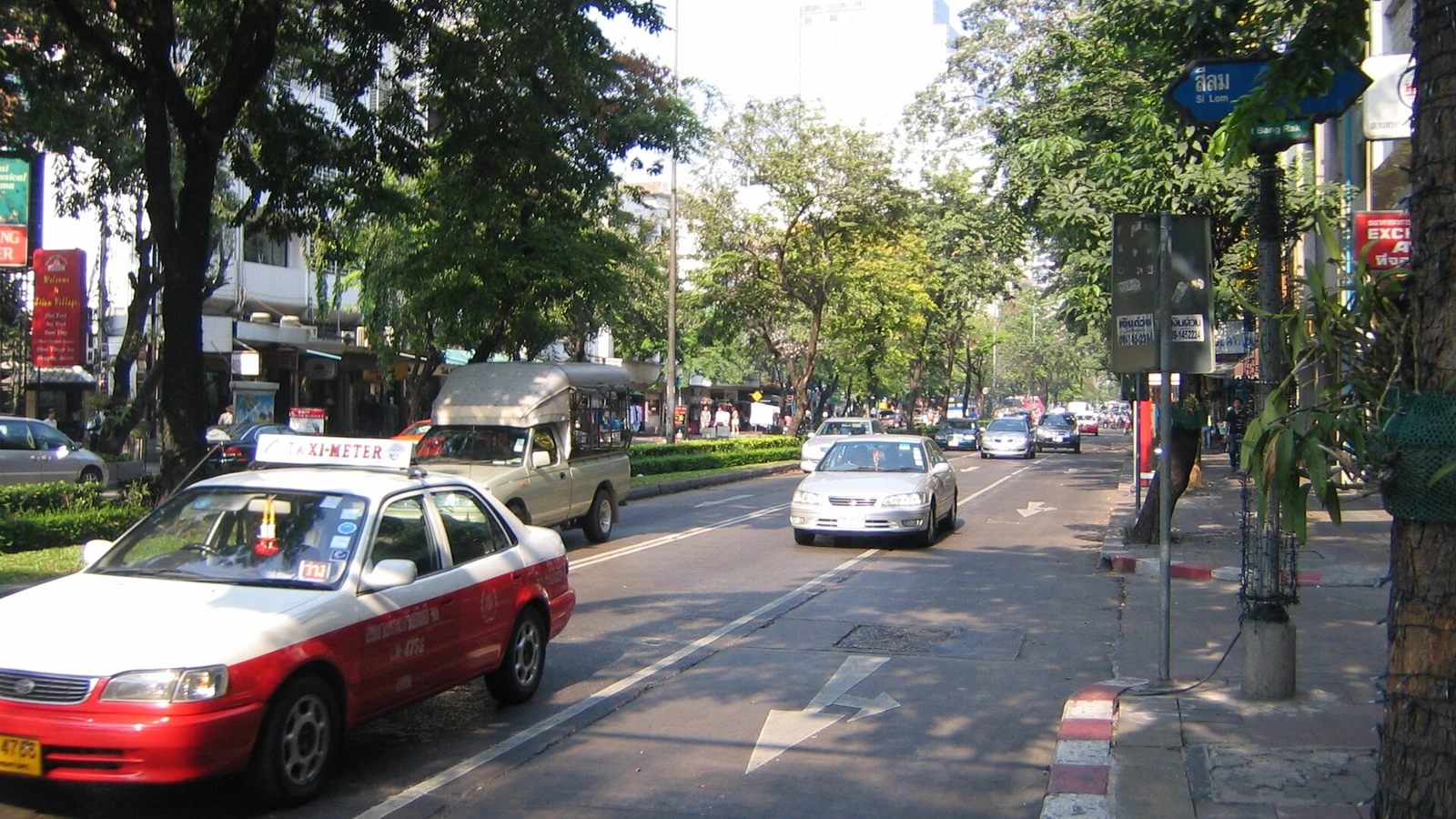
Siam and Silom are close enough that this is not a question of being on the “right” side of Bangkok. It is a question of what you want the hotel area to do when the sightseeing stops.
If you are still deciding among Bangkok's broad first-trip bases, use Where to Stay in Bangkok first. This comparison is for travelers who already like the idea of a central, rail-connected hotel and are choosing between two very different versions of convenience.
The same Bangkok day feels different at 7 pm
Siam keeps the day open
You can come back from sightseeing, walk into a huge shopping-and-dining district, make a last-minute BTS trip or simply stay indoors when Bangkok is hot or wet. The area is excellent at giving you options without requiring another plan.
Silom gives the day a clearer ending
A good Sala Daeng or Si Lom hotel puts restaurants, bars, the park edge and two rail systems into the same evening radius. It feels less like sleeping inside Bangkok's shopping core and more like returning to a city neighborhood with several ways out.
That distinction matters more than lists of attractions. If you expect to reach the hotel at 6:30 pm tired, shower and decide what to do next, Siam rewards indecision. Silom rewards travelers who already know they like the mix of park time, food, city evenings and MRT-led sightseeing.
Silom's real advantage is the second rail line
The strongest Silom micro-location is around Sala Daeng BTS and Si Lom MRT. Bangkok Expressway and Metro's current Si Lom station page lists Sala Daeng BTS as the feeder connection from Exit 2. That makes this small part of Silom unusually useful: you can use the BTS Silom Line for Siam, Saphan Taksin and other stops on that corridor, while the MRT Blue Line opens a different set of city movements.
This is not a claim that every Silom hotel has “BTS + MRT access.” Silom stretches. A hotel closer to Chong Nonsi can be excellent for BTS access and its immediate surroundings while being noticeably less convenient for Si Lom MRT. The district label is not the product; the hotel pin is.
If rail detail is one of your main booking filters, keep our Thailand transport guides open while comparing hotels. Bangkok works much better when you book the walk to the station, not just the station name in a hotel description.
Siam's advantage is simpler: it absorbs bad planning
BTS currently identifies Siam as the interchange between its Sukhumvit and Silom lines. For a first-time visitor, that is valuable because Bangkok plans rarely stay neat. A shopping morning becomes a café stop, rain moves an outdoor plan, dinner shifts to another neighborhood and suddenly the “perfect itinerary” is just a list of possibilities.
Siam handles that uncertainty well. You can change BTS lines at the same interchange, return to a dense indoor commercial area and make many ordinary evenings work without studying another transport layer.
That is why Siam also performs well against very different alternatives. If you are comparing central flexibility with river atmosphere, see Siam vs Riverside. If shopping volume is the real purpose of the trip, Siam vs Pratunam is the more useful comparison.
Run your actual four-day movement map
Do not count attractions. Count the kinds of journeys your hotel will create. A typical first trip might contain four very different days:
Siam usually wins Days 1 and 3. It is especially good when you want a familiar interchange and do not mind returning to the same central commercial zone each evening.
Silom can win Days 2 and 4. The MRT Blue Line is useful for Chinatown and old-city-side stations, while Lumpini Park adds a genuine early-morning or late-afternoon activity beside the hotel area rather than another cross-city outing.
If your four days look nothing like this, that is the point: redraw the strip. The better base is the one that removes the most repeated journeys from your trip.
Silom is three different hotel purchases
Choose this zone if the dual BTS-MRT setup is why Silom appeals to you. It keeps the transport argument honest.
Useful if your plans fit the BTS Silom Line and this part of the district, but do not pretend you are still booking the same MRT convenience.
Attractive when morning walks and the park environment matter, but check the exact walk to the rail station before paying for the view or address.
This micro-location check is especially important for solo travelers. A hotel can look central while its last 400 metres involve a dark side street, a long footbridge detour or a road crossing you will dislike when you are carrying shopping or returning after dinner. Trace the route from the station exit and from the likely ride-hail drop-off point to the lobby before booking.
Silom is busy and well established; the issue is not to label it unsafe. The issue is that the quality of a late return changes quickly block by block. A slightly less glamorous hotel with a clearer final walk can be the better first-trip choice.
Siam is better if the hotel is mostly a recharge stop
For many first-time visitors, the hotel is where you sleep, shower, leave bags and recover for an hour. If that is you, Siam's centrality is hard to waste. You do not need to love the neighborhood's personality to benefit from the interchange and indoor fallbacks.
It also works particularly well when you are shopping seriously but do not want shopping to control every day. If your plan is the opposite — repeated market runs and bag drops — the Pratunam comparison explains why a more specialist base can beat Siam.
If you are actually drawn to Sukhumvit's restaurant-and-nightlife corridor, do not force a Siam-versus-Silom choice. Our Sukhumvit vs Siam guide is the cleaner starting point, and Riverside vs Sukhumvit handles the opposite atmosphere-versus-flexibility decision.
Morning is the strongest argument for Silom
Bangkok Metropolitan Administration's current Greener Bangkok listing gives Lumpini Park daily opening hours of 04:30–22:00 and free admission. If you genuinely like an early walk, run or simply having a large green space available before breakfast, that is a repeatable quality-of-life advantage rather than a sightseeing checkbox.
This matters because hotel decisions should be based on repeat use. A park you visit once is an attraction. A park you cross or use every morning is part of the stay.
Siam has other strengths, but it does not replicate that exact pattern. If your ideal Bangkok morning is coffee, greenery and then the MRT to a sightseeing district, Silom starts to make more sense even if Siam looks more central on a tourist map.
Two hotels show what the location premium is buying
These are location examples, not ranked hotel recommendations.
Do not copy these examples blindly at a lower budget. Copy the relationship. In Siam, pay attention to how directly the hotel connects to the station and indoor network. In Silom, pay attention to whether you are really within an easy walk of both Sala Daeng and Si Lom if dual rail is the reason you chose the area.
Choose by traveler type, not by district reputation
- First solo trip, three nights, loose itinerary: Siam. Fewer transport decisions and easier rainy-evening fallbacks usually matter more than neighborhood character.
- Couple, four or five nights, food and city evenings: Silom becomes more attractive, especially around Sala Daeng/Si Lom.
- Shopping-led trip: Siam, unless Pratunam's specialist shopping logistics fit better.
- Chinatown plus old-city-heavy trip: Silom can be smarter if you book close enough to Si Lom MRT to use the Blue Line repeatedly.
- Early-morning runner or walker: Silom, provided the hotel is genuinely convenient to Lumpini Park.
- Hotel chosen mainly by luxury facilities: decide the property first, then test whether its transport setup still supports the trip. Do not let a district label overrule a hotel you plan to spend real time in.
The booking rule
For a first Bangkok trip, choose Siam unless you can name the Silom advantage you will use more than once. “It seems more interesting” is not enough. “I will use Si Lom MRT on two sightseeing days, walk in Lumpini twice and prefer the evening atmosphere” is enough.
Continue with the Bangkok destination hub, compare the broader city in Where to Stay in Bangkok, or check BKK vs DMK before locking the flight and hotel together. You can also browse all stay guides, build the trip around Thailand itineraries, or open all Do Thailand guides.
Sources checked 9 August 2026: BTS SkyTrain — current network structure and Siam interchange; Bangkok Expressway and Metro — Si Lom MRT station exits and Sala Daeng BTS connection; Bangkok Expressway and Metro — current Blue Line stations; Bangkok Metropolitan Administration — Lumpini Park current hours and access; Dusit Thani Bangkok — current Sala Daeng/Si Lom and Lumpini location information; Siam Kempinski Hotel Bangkok — current Siam location and covered access information.
Hotel booking options
Compare your dates, then choose the room—not the badge
Use these OTA links to check current room types and booking conditions for the destination or property discussed above. Do Thailand does not rank the platforms by commission.
Affiliate links are routed through Stay22. Do Thailand may earn a commission at no extra cost to you.