
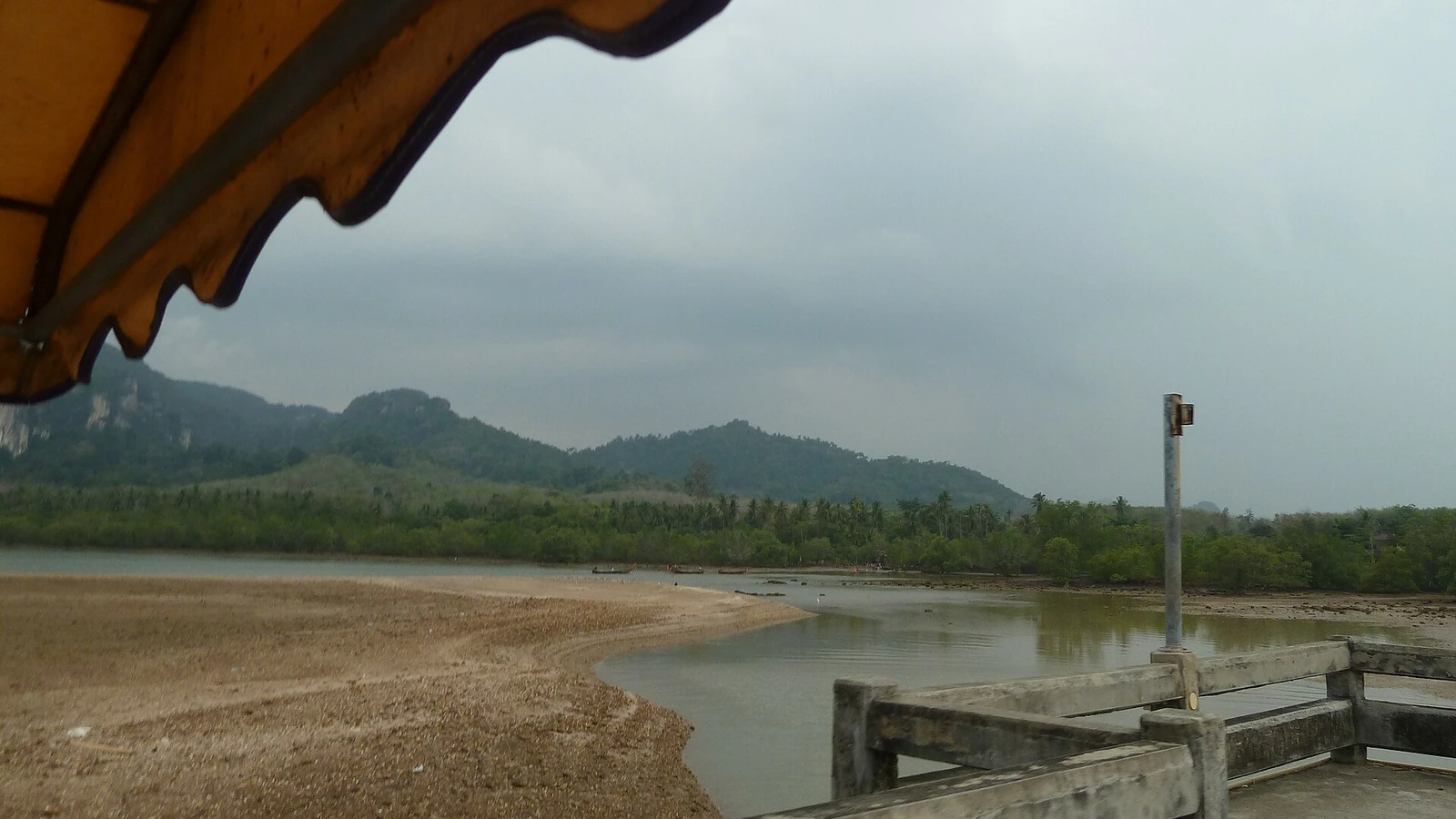
If you are still deciding whether to sleep on the peninsula at all, start with Ao Nang versus Railay. This guide begins one decision later. You have already chosen Railay; now you are staring at hotel pins on opposite sides of a very compact, road-inaccessible peninsula and wondering whether “East” or “West” will change the trip.
It can. Just not in the simplistic way that hotel search results suggest.
What do you want outside the lobby?
West is the stronger choice when stepping directly onto the classic sandy beach and staying for sunset is part of the hotel experience.
How are you arriving?
East becomes more attractive when your confirmed transfer uses the Railay floating pier or the Ao Nam Mao side.
How much will you roam?
If you will spend the day climbing, at Phra Nang, on boats or walking around Railay, exact hotel quality can matter more than the coast label.
The 5–10 minute fact should change how you shop
minutes on foot is the current walk Railay Princess Resort publishes from its East-side location to the west coast beach and Walking Street. That does not mean every room on East is exactly the same distance, but it is a useful reality check: Railay East and West are not separate resort towns.
Tourism Authority of Thailand describes Railay as three coastlines — West Railay, East Railay and Phra Nang — within the same beach-and-cliff area. There are no road transfers between East and West. Railay hotels also explicitly note that the peninsula is inaccessible by land, so once you are there, the ordinary way to change sides is to walk.
That is why “Which side is better?” is often the wrong first question. Ask what you want to be within thirty seconds of, then ask whether the hotel itself is worth choosing.
Railay West: pay for beach immediacy
West makes the strongest case at the edges of the day. You can step out for the main sandy beachfront, stay for sunset, wander back to the room and return without turning a beach moment into a short walk across the peninsula.
That sounds small until you are using the beach twice a day. If your ideal Railay stay is swim, shower, sunset, dinner, repeat, West converts location into actual hotel value.
Railay East: use the hotel as a base
East is more logical when beach-at-the-door is not the feature you care about most. Bhu Nga Thani, for example, describes its Railay East setting beside protected mangrove forest while emphasizing that the sandy beaches, climbing and cave areas are within walking distance.
If you are moving around anyway, walking a few minutes to West can be a cheaper trade than paying for a beachfront position you barely use.
West is worth more when you will use it more than once a day
One sunset is not a reason to pay a large room premium. A repeated pattern is.
If you are staying two or three nights and expect to swim before breakfast, return to the room at midday, head back to the sand later and linger through sunset, West keeps removing tiny bits of friction. You are not merely “closer to the beach.” The beach becomes part of the room routine.
That is the same logic behind choosing central Ao Nang Beach over the Nopparat Thara side: a location earns its premium through repetition, not because the map label looks more desirable once.
Railay Bay Resort & Spa currently describes itself as having beachfront access and also says its property sits across Railay’s east and west coasts. Sand Sea Resort similarly describes its footprint from West to East Railay. Those two examples are a warning against shopping by side name alone: some resorts blur the binary.
East is easier to justify when your transfer already points there
Railay Princess Resort currently states that it is directly on the Railay floating pier on the East side. Its location page also says the resort is around 15 minutes from Ao Nam Mao Pier and offers a private-van plus longtail airport transfer for an additional fee.
That makes East operationally useful for a traveler whose confirmed transfer is built around Ao Nam Mao. It is also why the separate Ao Nam Mao versus Ao Nang decision matters if you are staying on the mainland before or after Railay.
Do not generalize one hotel’s transfer arrangement into a universal public-boat promise. Boat points and timings vary by operator, weather and the service you actually booked. If luggage is heavy, ask your hotel which side you will arrive on and how the final handoff works before you choose the room.
Four current hotel examples show why “East or West?” is too crude
A pier-oriented East-side example. Its current official location page publishes the 5–10 minute walk to West and Walking Street, so it makes the “sleep East, use West” strategy unusually easy to evaluate.
A resort-led East-side example with a seafront pool and mangrove setting. It suits travelers who want the property and cliff scenery to carry more of the stay.
Its official material explicitly references location on both coasts. Treat the room category and exact building position as part of the purchase, not an afterthought.
Another example that crosses the neat search-filter categories. The correct comparison may be room-to-beach walking time rather than the resort name alone.
These are location examples, not a ranking. Current room availability, renovation work, transfer arrangements and exact building allocation can change; check the hotel’s own booking details for your dates.
For one Railay night, West usually makes more emotional sense
A single night is different from a four-night stay. You have fewer chances to use the location, so the version of Railay you want immediately outside the hotel matters more. If the reason for adding one Railay night is “I want to wake up and feel like I am actually on Railay,” West is the cleaner answer. If the one night is merely a practical stop around climbing or an onward transfer, East can be smarter.
Climbing makes the coast label less important
Railay is one of Krabi’s major climbing areas, and current GetYourGuide inventory continues to list half-day introductory sessions at Railay and Phra Nang. If climbing is a major reason you are staying, choose the session and meeting logistics first, then buy the hotel around the rest of the day.
A climber who leaves after breakfast, spends hours on the cliffs and finishes at Phra Nang is unlikely to get the same value from West-frontage pricing as someone who intends to use West Beach before and after every activity.
Check the current climbing format before paying for a hotel-side advantage
Current listings include half-day Railay climbing formats with morning or afternoon sessions and operator-specific pickup or meeting arrangements. Confirm where your session starts, then decide whether East-versus-West actually saves you anything.
See current Railay climbing detailsFor solo women, think about the return walk rather than “safety ratings”
Railay is compact, but compact does not mean every route feels identical in every condition. A 5–10 minute walk is easy when you are dry and unhurried; it feels different after a boat day in wet sandals, carrying a tote, phone and camera, or returning after dinner in rain.
Because there is no Grab ride between East and West, you cannot fix a poor micro-location by ordering a car. Look at the final approach to the hotel, reception position and how much of the route is along the main pedestrian flow. If you prefer not to walk alone with valuables after dark, choose the property that reduces that repeated route rather than simply choosing “West.”
The same principle matters when you arrive from the airport. The Krabi Airport to Ao Nang guide explains why the last handoff often matters more than the headline transfer time. Railay adds a boat leg, so the final hotel instructions deserve even more attention.
Rain and luggage can reverse the obvious choice
On a blue-sky afternoon, West feels like the obvious winner. In heavy rain with a suitcase, the more useful hotel may be the one that minimizes the arrival walk from your actual boat or has a clearer luggage transfer arrangement.
That is why a resort-first traveler should compare the entire property, not only the shore. If your ideal Krabi stay is mostly hotel time, you may even discover that Klong Muang versus Ao Nang or Tubkaek versus Klong Muang solves the quiet-resort question better without Railay’s boat-only arrival.
Choose by what you want at 7:15 p.m.
Do not let one island day decide the hotel either
If Hong Islands is part of the plan, choose the boat format separately. The Hong Islands longtail versus speedboat guide is a more useful decision than assuming one Railay coast automatically gives you a better tour day.
And if Railay sits at the end of a wider Krabi trip, keep the airport logic visible. The Krabi versus Phuket Airport guide helps with the gateway choice, while the Krabi destination hub connects the live base, boat and transfer decisions.
The booking rule
Pay for Railay West when you are paying to use West repeatedly. If you only need the beach once or twice and the East-side hotel is better for your room, transfer or activity pattern, take the short walk and keep the hotel decision focused on the parts of the stay you will actually use.
Continue with the live Stay guides, Experience guides and Transport guides. Do Thailand may earn a commission from eligible partner bookings; see the Affiliate Disclosure.
Hotel booking options
Compare the room terms before you book
Rates, room types, taxes, breakfast and cancellation terms can differ by platform and date. Check the exact conditions for the stay you are considering.
Affiliate links are routed through Stay22. Do Thailand may earn a commission at no extra cost to you.