
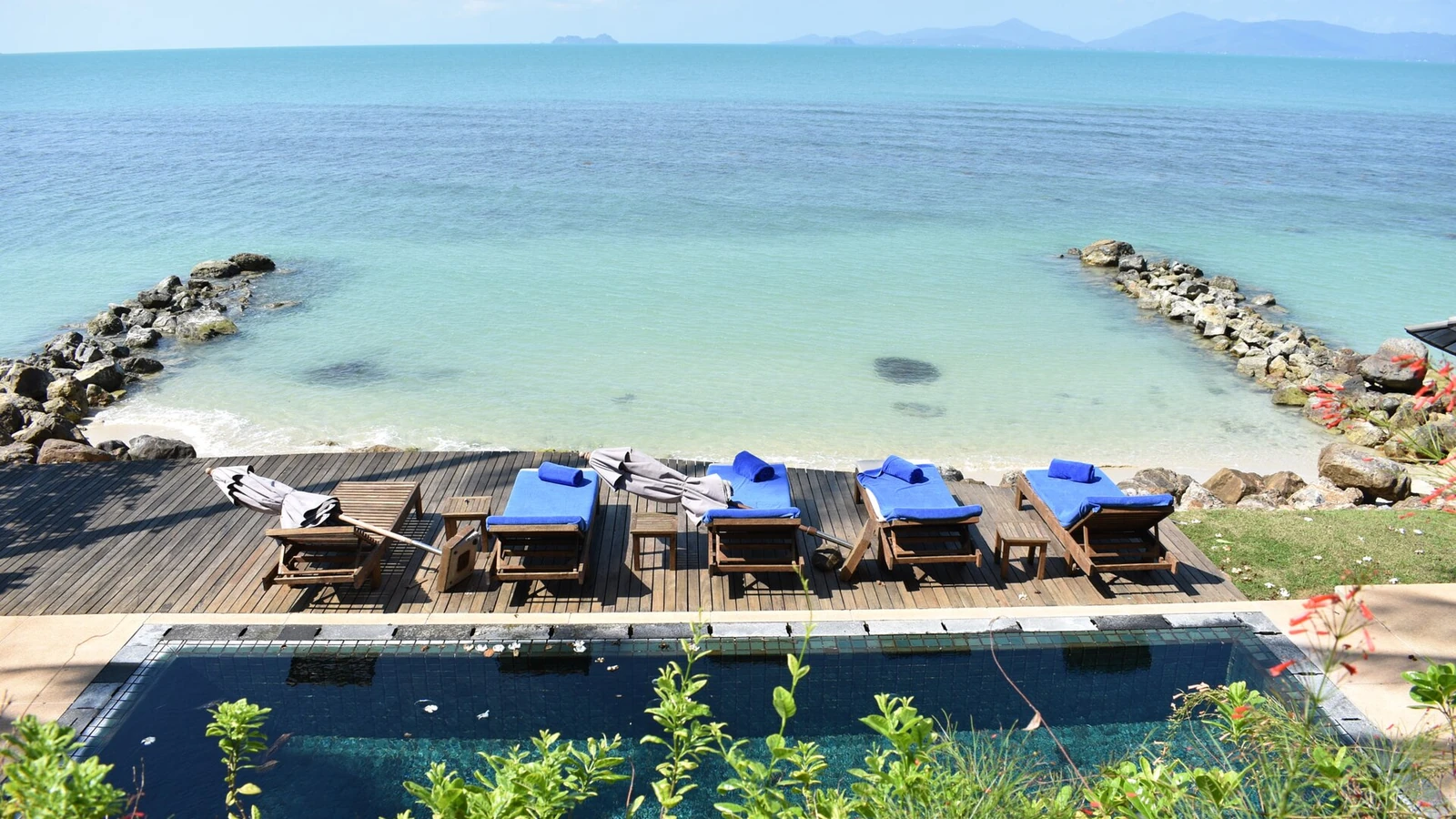
A split stay sounds luxurious on a spreadsheet. Two beaches, two rooms, two versions of Samui. The hidden cost is that one of your holiday days becomes a hotel-change day: you pack, settle the bill, arrange a car, wait for the next room, unpack again and mentally restart.
That trade is worth making only when the second hotel unlocks something you would not otherwise get. The strongest Samui version is usually convenient first, retreat second: spend the more active part of the trip somewhere such as Chaweng or Bophut, then move once to a west or south-west resort where staying in is the point.
The split-stay rule I would use
3–5 nights: choose one base and protect your holiday from unnecessary admin.
6–8 nights: a 4+2, 4+3 or 5+3 split can work when the second property changes the experience from exploring to resort time.
9+ nights: two bases become easier to justify, but one hotel move is still usually enough. Samui is not a destination where changing resorts every two nights makes the trip feel richer.
If you are still deciding which everyday base suits you, start with Chaweng vs Bophut or Chaweng vs Lamai. Those are base decisions. A split stay comes later, once you know what the first half of the trip is supposed to do.
What a hotel move really costs
Current resort policies show why the middle of the day is the awkward zone. Anantara Lawana in northern Chaweng currently lists check-in from 15:00 and check-out at 12:00. Anantara Bophut publishes the same 15:00/12:00 pattern. InterContinental Koh Samui Resort at Taling Ngam also currently lists 15:00 check-in and 12:00 check-out.
That does not mean your room will always be unavailable for exactly three hours; hotels may store bags and sometimes release rooms earlier. It does mean you should build the split on the assumption that noon to mid-afternoon belongs to the transfer, not to your room.
Close the first stay
Pack wet swimwear, chargers, cosmetics and the small items that spread across a room after four nights.
Checkout + car
Settle the room, retrieve luggage and handle the island transfer rather than drifting straight from breakfast to the pool.
The luggage gap
You can lunch or use facilities if the next hotel allows it, but you are travelling with valuables and waiting for a new room.
Start again
Check in, inspect the room, unpack what matters and only then begin the second version of the holiday.
For travelers who hate living out of a suitcase, that tax is real. It is also why moving hotels to shave a few minutes off one airport trip is usually weak logic; the separate last-night near Samui Airport decision covers when that move actually earns its keep.
The second resort should change what you do after 4 pm
The easiest way to test a split is not to compare beaches. Compare your late afternoon and evening.
Easy access to the island's busiest beach-and-dining side, with short airport logistics and more reasons to leave the property.
Split value: high if the second stay removes the urge to keep going out.
A calmer north-coast base with Fisherman's Village within walking reach from well-positioned hotels such as Anantara Bophut.
Split value: useful when you want independent dinners first, then a resort retreat later.
West-coast resorts are much more destination-like. Conrad Koh Samui describes its setting on the south-western tip and currently lists Chaweng restaurants and bars 18.5 km away; InterContinental sits on Taling Ngam Beach and publishes a scheduled paid shuttle to Chaweng or Nathon.
Split value: strongest when isolation is the feature, not a problem you plan to overcome every night.
The Tourism Authority of Thailand currently highlights Chaweng, Lamai and Taling Ngam among Samui's distinct beaches and describes Bophut as a place with old Chinese shophouses and a different atmosphere again. That variation is the argument for a split—but only if you will use the contrast.
Two pairings that make more sense than random hotel hopping
Chaweng or Bophut → Taling Ngam
Use the first stay for restaurants, markets, boat pickups and spontaneous plans. Use the second for sunsets, a private pool, spa time and dinner at the resort.
Best for: 7–10 nights, couples who want both activity and a true retreat.
Bophut or Maenam → Lipa Noi / west coast
Keep the first half quieter than Chaweng but still relatively practical, then move west if the final resort is strong enough to become the destination itself.
Best for: slow trips where the contrast is “independent north coast” versus “stay-in west coast,” not nightlife versus silence.
If the second half is specifically west-coast, read Taling Ngam vs Lipa Noi before choosing the property. Taling Ngam can be the more immersive resort retreat; Lipa Noi may make more sense when west-coast access matters but you still want easier exits or a ferry connection.
Do not split the stay just to collect two nice hotels
Two attractive resorts are not automatically two different experiences. A beachfront room in Chaweng followed by another beachfront resort on a nearby north-east beach can duplicate the same holiday while adding a checkout.
Ask what the second hotel changes:
- Does it give you a private pool you will actually spend half a day using? Compare the value against a private-pool villa or beachfront room.
- Does it remove the need to travel out for dinner because the resort itself is the plan?
- Does it move you closer to the ferry you genuinely need, rather than to a pier you will use once? If arriving from the mainland, the Nathon vs Lipa Noi ferry-arrival guide is the useful transport decision.
- Does it turn the last two days into recovery after an active first half?
If your answer is mostly “the second hotel also looks beautiful,” choose the better property and stay put.
Experience-heavy trips usually need fewer hotel changes
Organised boat days already create early pickups, wet bags, sunscreen, changing clothes and a long return to the hotel. If you are choosing between Koh Tao and Ang Thong, adding a hotel move between those days rarely improves anything.
The same applies to tours whose pickup area already includes your hotel. The tour-pickup vs hotel-location guide explains when a central base is genuinely valuable and when organised transport makes the hotel zone less important.
A useful rhythm is to put the activity block first. Stay where mornings are easy, do the boat day, cooking class, market evening or sunset experience, then move to the resort after the scheduled part of the trip is finished. That way the second hotel is not fighting your itinerary.
Three weak reasons to split Koh Samui
- “I want to see more beaches.” You can visit another beach without moving your toiletries and luggage.
- “The second resort is closer to one tour.” Check the operator's hotel-pickup zone before reorganising the stay around a single morning.
- “It makes the trip feel more luxurious.” Luxury can also mean not checking out, not repacking and knowing exactly where your sunglasses are.
For women traveling solo or as two friends, audit the transfer as well as the resorts
A split stay is easy when the move is a direct lobby-to-lobby car. It is less elegant when one property is on a steep or isolated road, the second cannot confirm early bag storage, or you plan to stop somewhere with luggage and valuables in the vehicle.
Make the move boring on purpose
Ask the first hotel to confirm checkout and luggage help, and the second to confirm when bags can be accepted. Use a direct hotel-arranged car or a ride you can identify and track if that makes you more comfortable. Keep passport, phone, medication, cards and one dry layer with you rather than in the suitcase.
If the transfer day includes lunch before check-in, choose somewhere you can keep the luggage under hotel control. A scenic detour is not automatically better when all of your belongings are in transit.
This matters especially on a west-coast move. Conrad's current official location information places the resort 28 km from Samui Airport and 18.5 km from Chaweng restaurants and bars. InterContinental's transport page likewise treats Chaweng and Nathon as separate shuttle destinations from Taling Ngam. Those are not reasons to avoid the west coast; they are reasons to arrive there with the intention to stay.
Book the split in this order
Choose the first base around movement
Pick Chaweng, Bophut, Maenam or another practical base by dinners, airport arrival and the experiences you already know you want.
Choose the second hotel around staying in
Judge the room, pool, beach, spa, restaurants and sunset hours. If the hotel only works when you leave it repeatedly, it is not functioning as the retreat half of the split.
Protect at least two nights for the second stay
One night is mostly check-in plus check-out. Two nights gives you one full middle day; three nights lets the move feel like a new phase rather than a novelty stop.
Then place fixed experiences
Put early boat days and scheduled classes before the resort retreat where possible. If breakfasts matter, check the separate breakfast-inclusive vs room-only guide before paying across both hotels.
Couples who are also filtering by atmosphere should make the split decision before the adults-only vs family-friendly resort decision. Location and trip phase are the bigger levers; age policy is a useful refinement after the two halves already make sense.
Price the practical base and the retreat as two different jobs
If a split still makes sense after the move-day test, compare Koh Samui hotels for the exact nights you would assign to each base. Check the room type, cancellation terms, transfer arrangements and current check-in policy directly before paying.
Compare Koh Samui staysWhen one resort is the better answer
Stay in one place when the trip is short, the hotel already sits in a base you enjoy, or most days are built around excursions rather than the property. One good hotel also reduces the number of operational details that can go wrong: no second luggage handoff, no room-ready gap, no new route to learn after dark and no extra cancellation policy to manage.
It is particularly sensible if your arrival is already late or your departure is early. The Samui Airport to Chaweng/Bophut guide helps with the first transfer; once you have reached a good base, there is no prize for creating another one unnecessarily.
When two bases genuinely improve the trip
Split the stay when you can describe the two halves in different verbs. Explore, then retreat. Go out, then stay in. Boat days, then pool days. If both halves are “beach hotel and dinner nearby,” the split is probably decoration rather than strategy.
For most couples, that means one practical base for four or five nights followed by two or three nights in a resort you are excited to use from breakfast through sunset. Do that, and the hotel move has a purpose. Otherwise, pick the better resort, unpack once and let Samui come to you.
Do Thailand separates editorial recommendations from commercial links. See our Editorial Policy and Affiliate Disclosure.
Hotel booking options
Compare the room terms before you book
Rates, room types, taxes, breakfast and cancellation terms can differ by platform and date. Check the exact conditions for the stay you are considering.
Affiliate links are routed through Stay22. Do Thailand may earn a commission at no extra cost to you.