
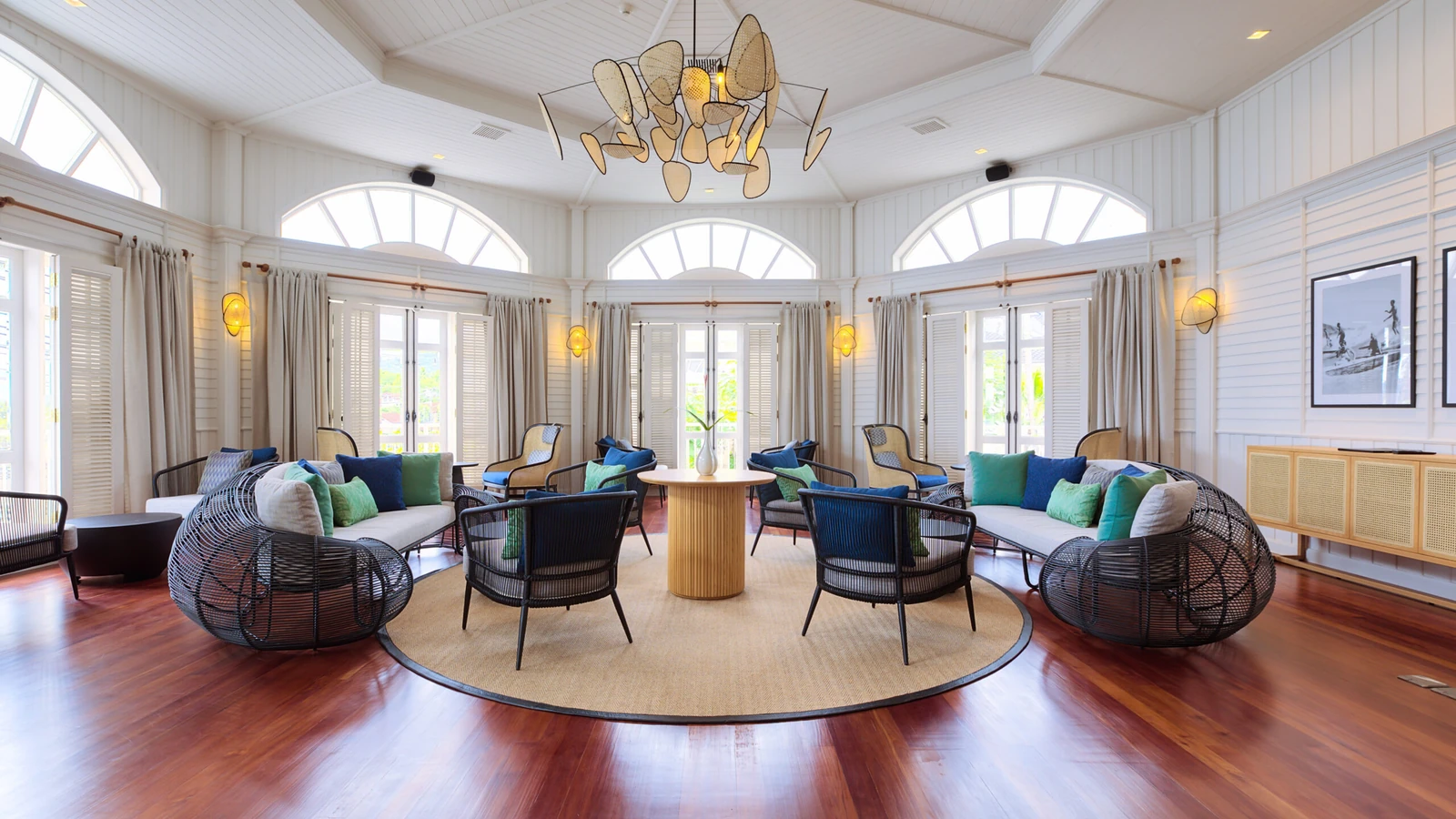
Lamai makes this decision unusually easy to get wrong because both options can look like the same destination on a hotel map. One property places the beach, breakfast and an evening walk within the same low-effort orbit. Another may still carry a Lamai address while sitting on a private hill or secluded bay, where the reward is privacy and a much stronger room experience.
If you have not committed to Lamai yet, start with Chaweng vs Lamai. This guide begins one step later: Lamai is already the choice, and now the question is whether the hotel should connect you to Lamai or deliberately pull you away from it.
When Lamai is your base
You want to leave without planning a vehicle, come back after dinner without checking an app, and use the hotel as a comfortable launchpad between beach time and experiences.
When the hotel is an experience
You want privacy, a view, a pool or spa rhythm worth protecting. Going into Lamai is something you do occasionally, not a routine you expect the location to make effortless.
The simplest test: count exits, not stars
A hillside villa can be the better hotel and still be the worse booking for your trip. The distinction is how many times you expect to leave after check-in.
Take a four-night stay. If you plan two boat or land days, three independent dinners, one market or cocktail evening and a couple of casual food or pharmacy runs, the hotel-to-road transition repeats constantly. A beautiful view does not disappear, but you pay for it every time an ordinary decision becomes a pickup.
If the same four nights are mostly breakfast, private pool, spa, beach, long lunch, one organised excursion and dinner at the resort, the equation flips. Now the hillside setting is not inconvenient; it is the thing you came for.
Use the Lamai exit ledger
- 0–1 off-property trips most days: a hillside or secluded villa can work beautifully.
- 2 off-property trips most days: compare the villa benefit with the transport routine very carefully.
- 3+ off-property trips most days: a beachfront or walkable Lamai hotel is usually the calmer choice, even if the room itself is less dramatic.
This is an editorial planning rule, not a claim that every Lamai hotel has the same road access or travel time.
Official hotel pages show why “Lamai” is not one hotel experience
Tourism Authority of Thailand currently highlights Lamai as one of Koh Samui's principal beaches. But the hotels using a Lamai address cover very different relationships with the beach and town.
OUTRIGGER's current official material places the resort on Lamai Beach and says its beach club sits at the beachfront across the road from the main resort. Its activity material describes the property on the quieter northern sands of Lamai and says shopping and dining are close by. The useful lesson is not that every beachfront hotel is equally walkable; it is that the beach itself can be part of your normal hotel circulation rather than a separate ride.
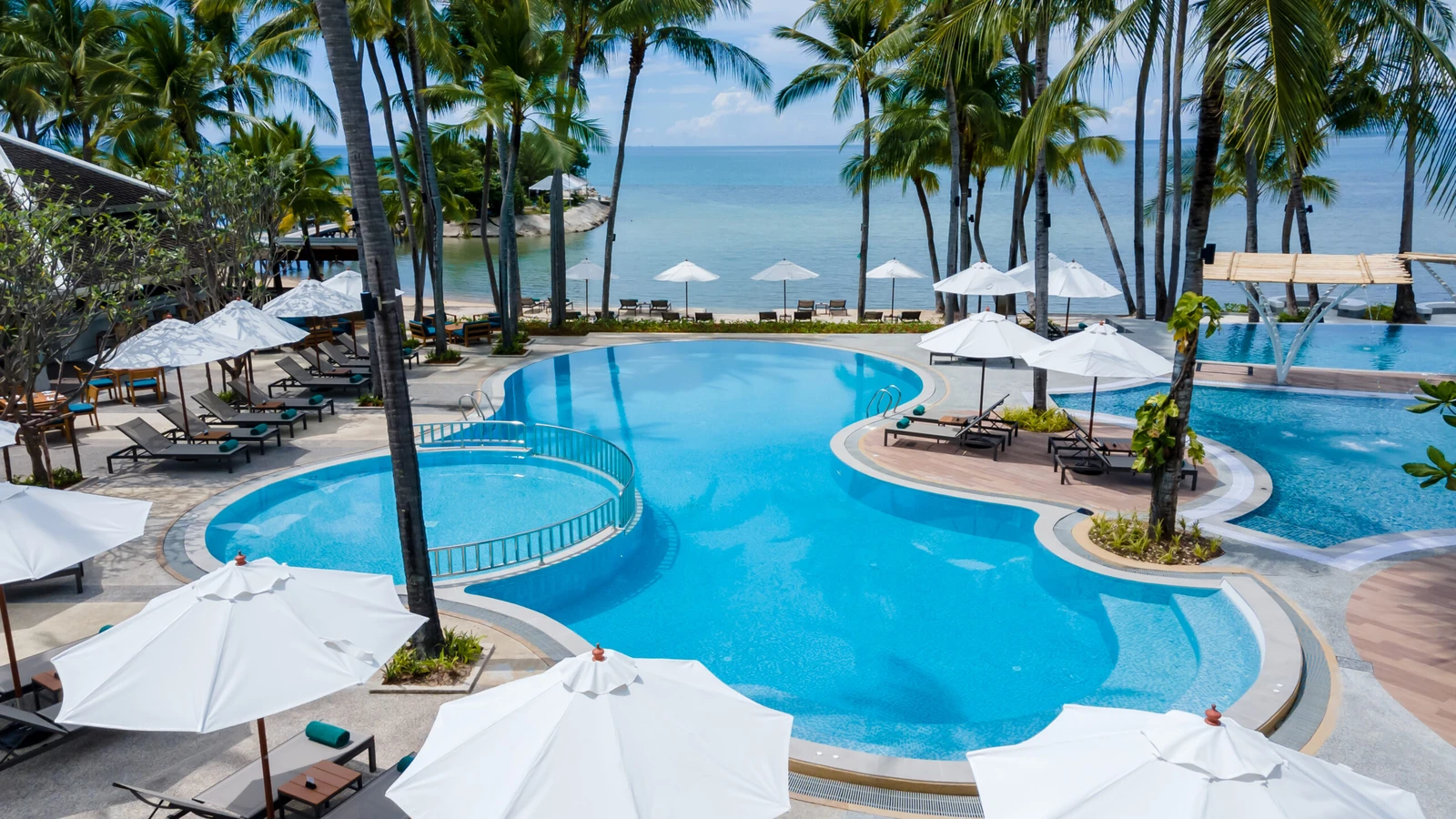
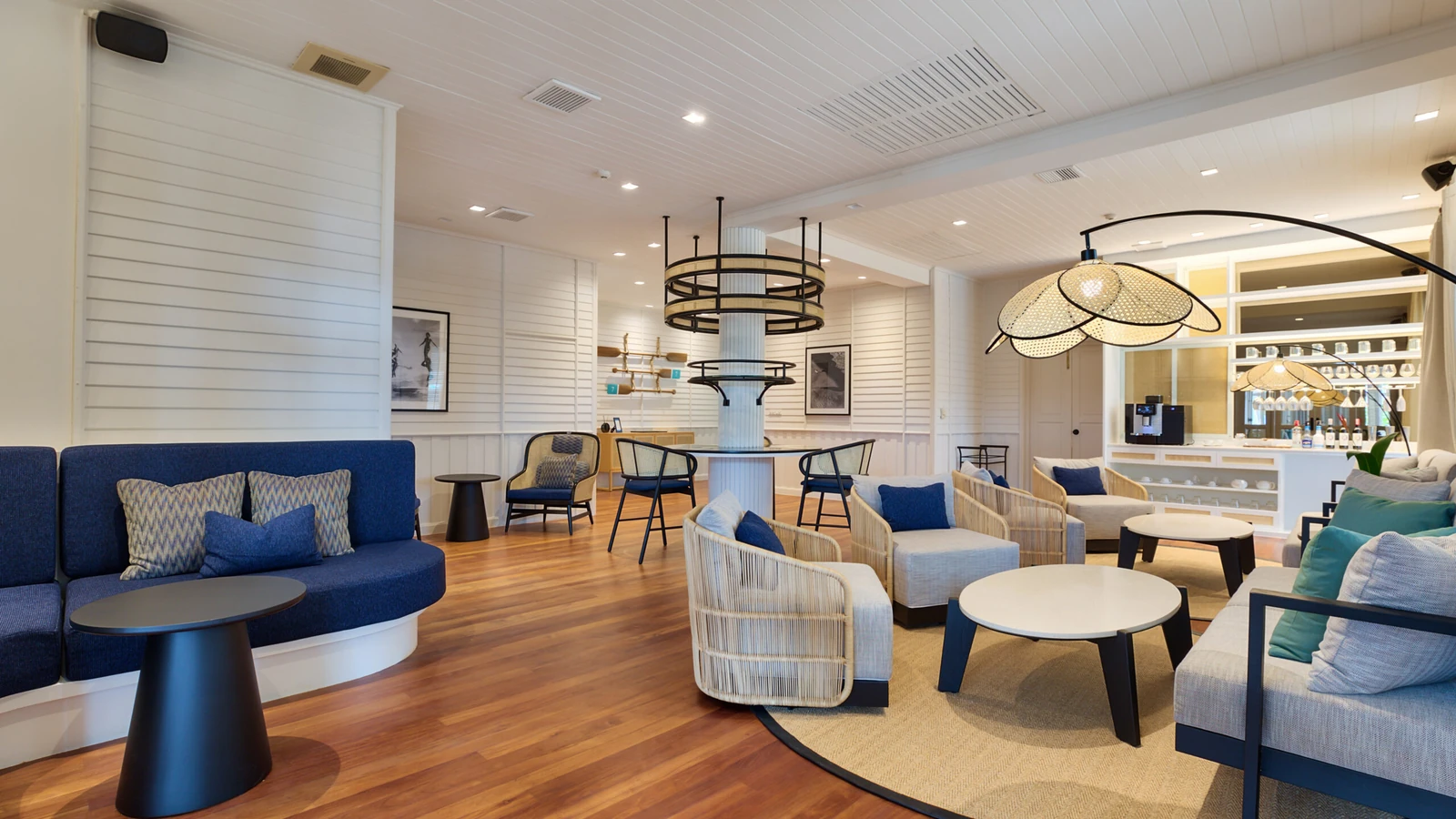
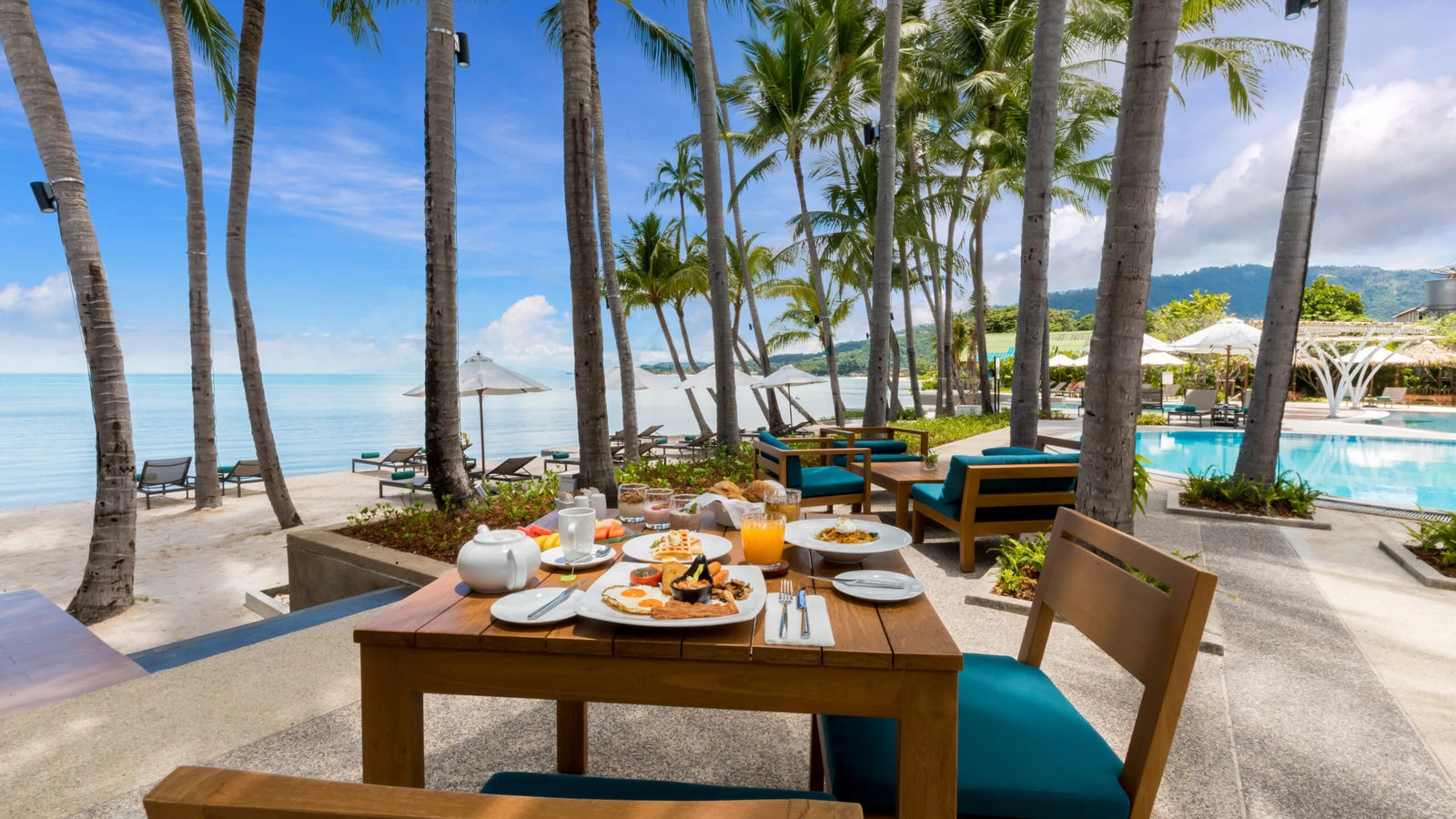
Banyan Tree describes itself as an all-pool-villa resort in a private bay on a lush hill overlooking Lamai Bay. Its current FAQ places the resort about 5 km from Lamai's main area and says the hotel can arrange transport around Samui. That is a clear resort-first proposition: you are near Lamai geographically, but you should not book it expecting a normal walk-out Lamai evening.
Renaissance currently sells both beachfront pool villas and hilltop/sea-view accommodation within the same Lamai-address resort, and lists a complimentary local shuttle among its transport services. This is the useful middle case: sometimes you can keep the same resort and change the balance between elevation, view and beach position by choosing the room category carefully.
If you are already deciding whether the upgrade should buy privacy or beach position, read Koh Samui private pool villa vs beachfront room. That is a room-value decision. This Lamai guide is about the extra layer around it: what happens after you leave the room.
A sea view is most valuable when you are there to see it
Hotel photography naturally emphasises the ten minutes when the choice looks obvious: morning light over the Gulf, a private pool, a balcony above the palms. The harder question is how many of your waking hours actually happen there.
If you are leaving before breakfast for a scuba or snorkeling day, coming back salty in the late afternoon, showering and heading out for dinner, the view may get one short window. If you are building a slow afternoon around a spa treatment, room service and private-pool time, it can shape half the day.
This is why the hillside option often makes more sense for a deliberate resort trip than for a first Samui visit full of curiosity. It needs time to perform.
Boat day + dinner out
Lean beachfront/walkable. You are already spending the day's energy on transfers, water, heat and changing clothes. Making dinner another vehicle decision adds friction exactly when your energy is lowest.
Spa + pool + one outing
Lean hillside villa. The hotel is now supplying the memorable hours, so privacy and view have repeated value rather than decorative value.
Different evening energy
Lean walkable. When one person wants to go out and another wants an early night, independent movement is easier if every small plan does not require the same car.
The late-evening return is the hidden Lamai test
Picture the least glamorous return of the trip: it is 9:45 p.m., you have wet hair from an afternoon swim, sandals that are not ideal for a slope, and a bag containing your phone, sunscreen and a damp swimsuit. The difference between stepping out near the hotel and coordinating a pickup to a secluded property is much larger than it felt at noon.
For women traveling alone, this is where an exact property check is more useful than broad statements about Lamai. Ask where app-based cars stop, whether the route from the drop-off point to reception is lit, whether your room is reached by steep paths or internal transport, and what happens if you return after the resort's normal shuttle hours. Do not assume a buggy or scheduled shuttle runs whenever you want simply because the property sits on a hill.
Grab's current Thailand coverage includes Samui, and its app supports exact pickup/drop-off pins and upfront ride information. That is a useful fallback, not a reason to ignore the hotel entrance. The final internal stretch still belongs to the property.
The same transport logic appears in Chaweng Noi vs Chaweng, but Lamai's version is different: you are not choosing between two nightlife intensities. You are deciding whether elevation and seclusion improve the hotel enough to justify leaving the beach-town rhythm behind.
Rain makes both options better — in different ways
A hillside villa with a strong room, private pool, covered outdoor area, spa and good dining can turn a wet afternoon into usable hotel time. That is genuine resilience.
But rain also increases the cost of every unnecessary transfer. If the hillside property is beautiful only when you are outside the room, while dinner, coffee and most activities still require a car, bad weather can make the isolation feel more pronounced rather than less.
For a beachfront or walkable hotel, rain reduces the advantage of the beach itself but can increase the value of having restaurants, shops and massage options close enough that you are not organising a long ride for every small change of plan.
Day tours rarely justify the hillside location by themselves
Many organised Samui experiences offer hotel pickup, so you generally should not choose an elevated resort because you think it will be a better tour base. Exact coverage, pickup points and supplements vary by operator and property access, which is why the separate Koh Samui tour-pickup and hotel-location guide is worth checking before you commit.
The more important distinction is what you do on non-tour days. An inland day such as Na Muang vs a 4x4 safari or a Koh Samui cooking class can consume a substantial block of time away from the hotel. Stack two or three such days together and the case for paying heavily for a villa you barely use gets weaker.
Airport distance should not decide this one
Current hotel information puts Banyan Tree Samui about 19 km and roughly a 30-minute drive from Samui Airport. OUTRIGGER currently describes its airport transfer as around 25–30 minutes depending on which official hotel page you consult, while Renaissance lists Samui Airport at 11.6 km and provides reserved airport-transfer options.
Those figures are useful for planning arrival, but they are not strong enough to override four days of hotel use. One airport ride happens twice. Your beach, dinner and room pattern repeats every day.
If arrival logistics are the part making you nervous, solve that separately with the site's Thailand transport guides and the current Samui Airport transport guide. The latter covers the island's arrival options and app-based transport logic even though your final destination here is Lamai.
Do not confuse “beachfront” with “zero-friction”
Beachfront is a useful filter, but it is not the final answer. OUTRIGGER's current layout is a good reminder: its main resort and beachfront Edgewater facilities are separated by a road. Other Lamai hotels may place reception, rooms, restaurants and the actual beach in different parts of a large property.
Before booking, inspect the route from your exact room category to the beach gate, breakfast, main road and the pickup point a driver will use. A beachfront address with a long internal walk can behave more like a resort. A hillside property with efficient internal transport and a room you genuinely love can feel easier than the map suggests.
Use the label as a clue, then check the path.
The booking rule I would use
If you cannot name two hotel-only moments you are excited to repeat, do not give up Lamai walkability for the hillside view.
“The villa looks amazing” is not specific enough. “We will use the private pool before breakfast, come back for sunset, book a resort spa afternoon and eat on-property twice” is specific. That is a trip that can make a secluded villa earn its position.
If your real list is “island tour, snorkeling, dinner out, massage in town, cocktails, beach walk, maybe another restaurant,” choose the hotel that lets Lamai do more of the work.
So which one should you book?
Book the beachfront or genuinely walkable Lamai hotel for a first visit, a shorter active trip, several independent dinners, mixed-energy friends, or a solo stay where easy evening movement matters. You are buying freedom to make small decisions without turning them into transport.
Book the hillside sea-view villa for a resort-led couples trip, a private-pool stay, a wellness break or a longer holiday with enough unstructured hotel time for the view and privacy to be used repeatedly. You are buying a stronger place to stay, not a better place from which to keep leaving.
If this decision has made you wonder whether Lamai is even the right beach town, go back to Chaweng vs Lamai. For the broader island graph, browse the Koh Samui destination hub, Stay guides and Koh Samui experience decisions.
Hotel booking options
See what the same stay looks like across major OTAs
Availability and room conditions can vary between platforms. Compare the exact room type and cancellation terms rather than assuming the first listing is equivalent.
Affiliate links are routed through Stay22. Do Thailand may earn a commission at no extra cost to you.