
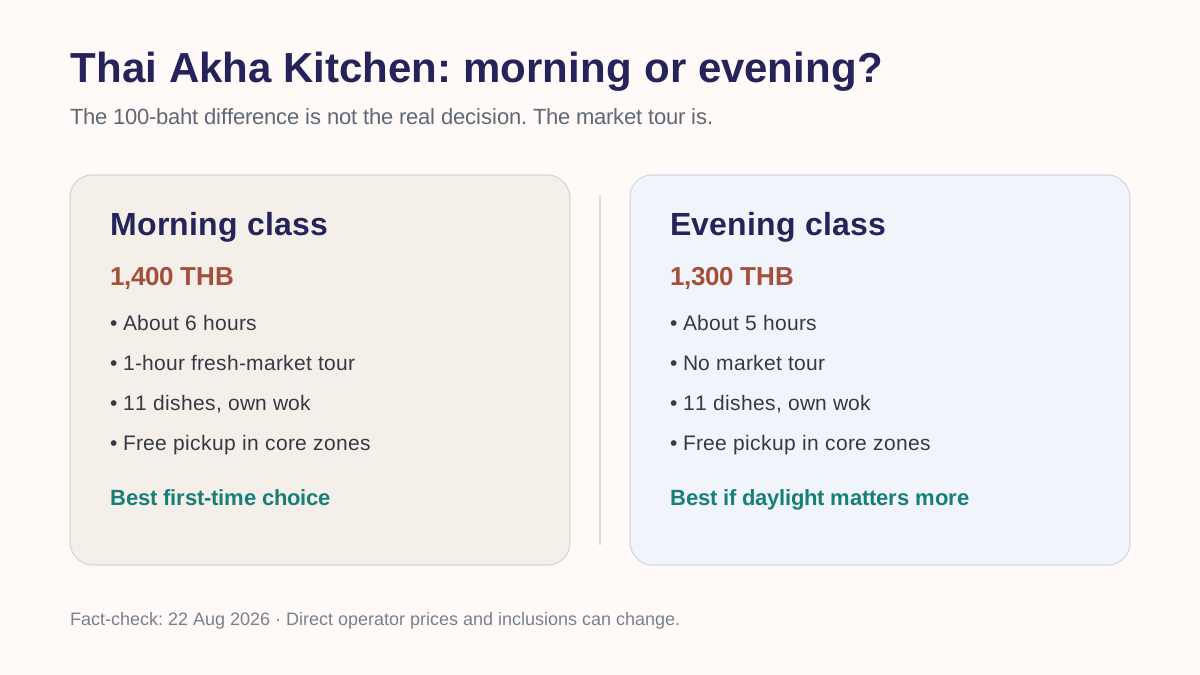
Thai Akha Kitchen currently lists its morning class at 1,400 THB for roughly six hours and the evening class at 1,300 THB for roughly five. Both centre on an 11-dish cooking format, individual wok stations, English instruction and pickup/return service in the operator’s core pickup zones. The morning class adds the local-market tour. If you are comparing these two sessions, the real question is whether one hour of your morning is worth more to you than the market context—not whether 100 THB is a meaningful saving.
Is Thai Akha Kitchen Chiang Mai actually worth choosing over a normal cooking class?
Yes, if you want the cooking class itself to be one of your Chiang Mai experiences rather than just a convenient meal activity. The operator’s current programme is broader than the standard format of choosing three or four familiar Thai dishes. The fixed part of the menu includes papaya salad, spring rolls, two desserts and three Akha dishes—Sapi Thong, Akha Salad and Akha Soup—before you choose your own curry, soup and stir-fry from a separate list.
That matters because the differentiator is not just quantity. You are getting a second food tradition inside the same class. If you only want to learn pad Thai, green curry and mango sticky rice, you do not need Thai Akha Kitchen specifically. A cheaper or shorter Chiang Mai class can do that job. The premium makes more sense when you want the Akha component and you are happy spending several hours cooking and eating.
DOTH already has a broader Chiang Mai cooking-class half-day vs full-day comparison. Use that page if you have not even decided how much of the day cooking should take. This page is for travellers who have narrowed the operator down to Thai Akha Kitchen and need to pick the right session.
Morning vs evening: the 100 THB difference is almost irrelevant
Morning class
1,400 THB directBest for: first-time cooking-class visitors, food-focused travellers and anyone who wants the market to explain what they are about to cook.
The current operator schedule describes a roughly six-hour experience. The market component runs for about an hour before the main cooking session. Pickup and return are included in the stated core zones.
Evening class
1,300 THB directBest for: short Chiang Mai trips where daytime sightseeing is more valuable than market context.
The current operator page describes a roughly five-hour session from late afternoon into the evening. You still cook and eat the full 11-dish programme, but the market tour is removed.
If the market interests you at all, I would spend the extra 100 THB and choose morning. A guided market visit is one of the few class extras that can change what you notice during the rest of your trip: herbs, curry ingredients, noodles, vegetables, condiments and the logic of what sits together on a Thai market stall.
If you have already done a market tour elsewhere, or your Chiang Mai daylight is limited, evening becomes more attractive. You are not paying substantially less; you are buying back your daytime hours.
What does the morning market tour add in practice?
The current morning programme uses a local fresh market before the cooking session. The operator says the market component is designed to introduce the ingredients you will later use rather than simply give you free browsing time. That is the right reason to value it. A market tour is useful when someone is telling you what you are looking at; otherwise, many visitors walk through Chiang Mai markets recognising only the fruit and packaged snacks.
The practical benefit continues after the class. If you plan to eat independently for the rest of the trip, understanding basic herbs, sauces and produce makes food stalls and local restaurants less opaque. I would still not call the market tour essential for everyone. If your trip is only a few nights and your priority is temples, cafés or a Chiang Mai Night Safari evening, you may get more value from protecting the daylight.
Eleven dishes sounds excessive. Is it?
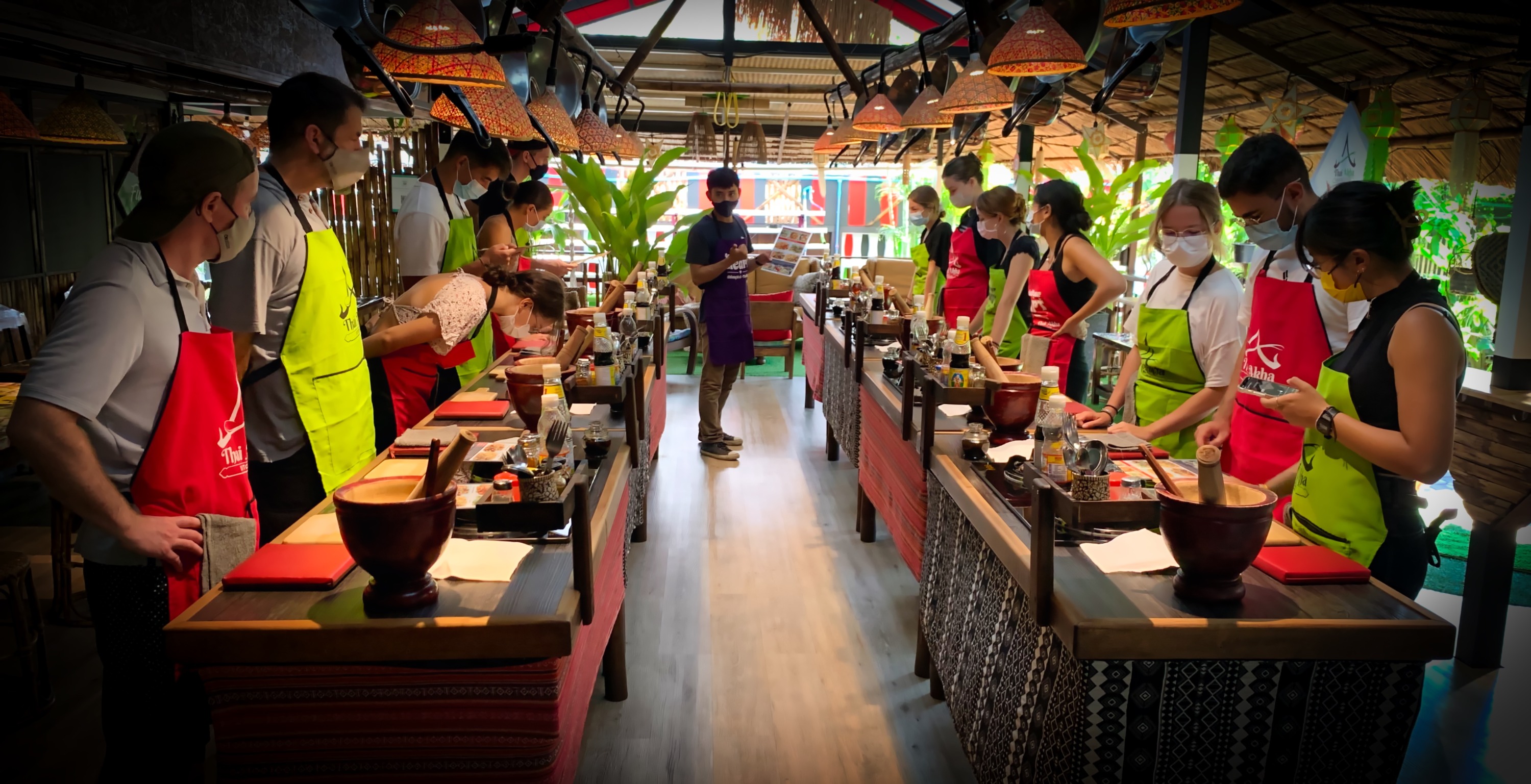
It can be. This is not the class I would choose if you want a light activity before a big dinner. The operator’s selling point is volume and participation: every guest cooks at an individual station, and the menu combines shared fixed dishes with several personal choices. The result is closer to a food-focused half day than a short workshop.
You also do not need to finish every plate as if you were at a restaurant. The value is in repeating techniques: chopping, pounding curry paste, balancing seasoning, using the wok and seeing how the same ingredients behave across different dishes. If you are only interested in eating, book a food tour instead. Cooking-class value comes from doing.
The current menu lets participants choose one curry and paste, one soup and one stir-fried dish. The operator also publishes adaptations for vegan, vegetarian, pescatarian and other dietary styles. That flexibility is useful for two women travelling together who do not eat the same way: you are not forced into one shared menu simply because you booked together.
Dietary requirements: this is one of the stronger reasons to choose it
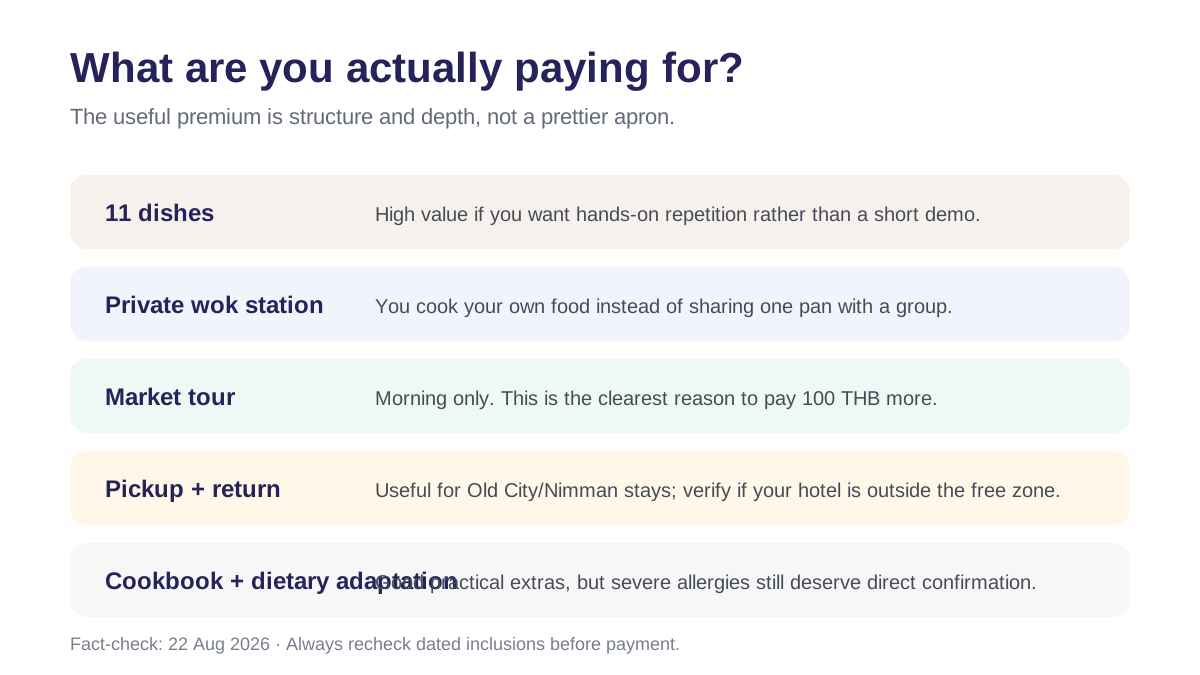
Thai Akha Kitchen currently states that individual stations can be adapted for vegan, vegetarian, pescatarian and other dietary needs, and that ingredient substitutions are prepared separately for each student. That is more practical than a class where several guests share one wok.
I would still be careful with the phrase “allergy safe.” A private station reduces ingredient sharing between students, but it does not turn an open cooking school into a medically controlled allergen-free facility. If you have a severe allergy, contact the operator before paying and ask about the exact ingredient, shared preparation surfaces, sauces and cooking environment.
There is also a specific Halal point worth knowing. The operator’s current dietary page says its standard chicken is not Halal-certified, although other components can be adapted and guests who require certified chicken may need to make a special arrangement. That is exactly the kind of detail worth resolving before the class, not after pickup.
How useful is the included pickup?
Very useful if you stay in the core zones; less useful if you book accommodation farther out and assume “free hotel pickup” means anywhere in greater Chiang Mai. The operator’s current pickup page specifically names Chiang Mai Old City and Nimman for free pickup and return. It currently gives morning pickup around 08:15 and evening pickup around 16:15.
If you are staying inside the Old City or in Nimman, this removes a small but annoying piece of friction. You do not need to negotiate a songthaew, explain the cooking-school location to a driver or arrive hot after walking in midday weather. For a solo woman, the evening return is also useful because the activity has a defined end-to-end transport plan rather than leaving you to organise a new ride after several hours of cooking and eating.
If your hotel is outside those zones, confirm the pickup arrangement before selecting the session. Do not assume a resort in Mae Rim, Hang Dong or a distant riverside property gets the same free service. If your whole Chiang Mai hotel decision is still open, compare Old City vs Nimman; both are easier fits for this class than a location chosen purely for resort atmosphere.
Morning class: who should choose it?
- First-time Chiang Mai visitors who want one food experience that explains ingredients as well as recipes.
- Travellers who actually cook at home and will benefit from seeing ingredients before learning the recipes.
- Two friends with different dish preferences because the individual-station format gives each person more control.
- Vegetarian or vegan travellers who value a class built around individual adaptation rather than one shared pan.
- Anyone staying several nights who can afford to give up most of the morning and early afternoon.
I would pair the morning class with a low-pressure evening rather than another major attraction. You will have eaten repeatedly, stood at a cooking station and concentrated for hours. A Sunday Walking Street or Night Bazaar evening can work if the day and your energy line up, but do not turn the class into the opening act of an overpacked day. If markets are part of your plan, our Sunday Walking Street vs Night Bazaar comparison helps keep the two experiences distinct.
Evening class: when is it the smarter choice?
The evening session is smarter when your Chiang Mai daylight is already expensive. If you only have two or three full sightseeing days, spending the morning and early afternoon in a cooking school can crowd out Doi Suthep, a neighbourhood day or a rural excursion. Evening lets you use the daylight first and then turns dinner into the activity.
It also suits travellers who already know Thai ingredients reasonably well or have taken another Southeast Asian market tour. You still get the Akha dishes and hands-on cooking, which are the real operator-specific reasons to book. You simply remove the part with the weakest marginal value for you.
The trade-off is energy. An evening class after a full temple or mountain day can feel longer than five hours. If you have spent the afternoon walking in heat, do not assume cooking is “rest.” You will be standing, chopping, listening and eating. On a short trip I would either protect the daytime or protect the evening, not try to maximise both.
Is Thai Akha Kitchen good for solo female travellers?
Operationally, yes. A structured class solves several common solo-travel frictions at once: you have a set activity, a group environment, food is part of the programme, and pickup/return is available in the core zones. You do not need to decide where to eat alone afterwards because dinner or the main meal is effectively built in.
The individual workstation is another practical advantage. You are not dependent on being paired with a stranger to complete the recipe. That sounds minor, but it makes the experience feel less like a group exercise where one confident person takes over the wok.
For the evening session, keep your return boring. Confirm that your hotel is inside the included return zone, keep the hotel pin saved offline, and do not schedule a late bar crawl simply because the class finishes in the city. The easiest night after a five-hour cooking session is often shower, short walk and bed.
What should you wear?
This is a cooking class, not a temple, so the problem is practicality rather than modesty rules. Wear something you are comfortable standing and cooking in for several hours. Closed or secure shoes make more sense than loose slides if you are moving around a kitchen with hot pans and liquids. I would avoid long loose sleeves, dangling jewellery and anything you will be upset about if it smells like frying or curry afterwards.
For the morning class, remember that the market section happens before the kitchen. Chiang Mai can be humid and warm even early in the day. A small crossbody bag is easier than a large tote while you are looking at ingredients and then moving into a workstation. You do not need to bring a full daypack simply because pickup is included.
Is the cookbook a reason to choose this class?
No. It is useful, but it should be treated as a take-home tool, not the purchase reason. The current programme includes a printed recipe book, and the operator also makes recipes available in multiple languages. That improves the chance that you can reproduce the dishes later.
But a cookbook cannot replace the live part that is actually worth paying for: seeing the ingredient texture, watching the timing, tasting as you adjust seasoning and understanding how hard or soft the curry paste should be before it goes into the wok. If you are not interested in that process, download recipes and spend the money elsewhere.
How does Thai Akha Kitchen compare with Grandma’s Home?
They answer slightly different desires. Thai Akha Kitchen is stronger when the Akha component and a large 11-dish programme are the point. Grandma’s Home is attractive when the farm setting and the choice between half-day and full-day structures matter more. DOTH’s existing Grandma’s Home half-day vs full-day guide covers that decision in detail.
I would not choose between them on review score alone. Choose Thai Akha Kitchen if you want the Akha dishes and individual-wok volume. Choose Grandma’s Home if the farm experience and a broader session-length decision fit your trip better. You can spend slightly more or less on either platform depending on date and inventory, but the difference in experience matters more than a small marketplace price gap.
Which Thai Akha Kitchen ticket should you actually book?
| Your trip | Book | Why |
|---|---|---|
| First Chiang Mai cooking class | Morning | The market adds context and the direct price is only 100 THB above evening. |
| Short trip with valuable daylight | Evening | You keep the day for temples, neighbourhoods or a mountain trip. |
| You already did a market tour | Evening | The missing market is no longer a meaningful loss. |
| You love food markets and cook at home | Morning | The ingredient explanation is part of what you are paying for. |
| Severe food allergy | Confirm first | Individual stations help, but direct operator confirmation matters more than the session time. |
Book only after you choose the session—not just the operator
Klook currently has an exact English Thai Akha Kitchen product page covering the cooking-class experience. Before paying, check the selected session, pickup zone, cancellation conditions and whether the dated package includes the market tour. Marketplace prices can move, so I would not choose the platform on an undated headline discount.
At this fact-check, the connected English KKday search did not return an exact Thai Akha Kitchen product, and GetYourGuide returned no connected exact result. I would rather show one correct booking option than three loosely related cooking classes.
The final decision
I would choose Thai Akha Kitchen’s morning class for most first-time visitors. The direct price difference is too small to justify skipping the market if the market is even mildly interesting to you, and the Akha dishes give the class a reason to exist beyond the usual Thai-cooking checklist.
I would choose evening instead when Chiang Mai daylight is scarce, when you have already done a food market tour, or when a morning class would force you to drop a higher-priority experience. You are not buying an inferior cooking session; you are deliberately exchanging market context for itinerary flexibility.
I would skip Thai Akha Kitchen entirely if you only want a short demonstration, do not enjoy cooking, or mainly want a social dinner. The programme is too long to be worthwhile when the hands-on process itself does not interest you.