
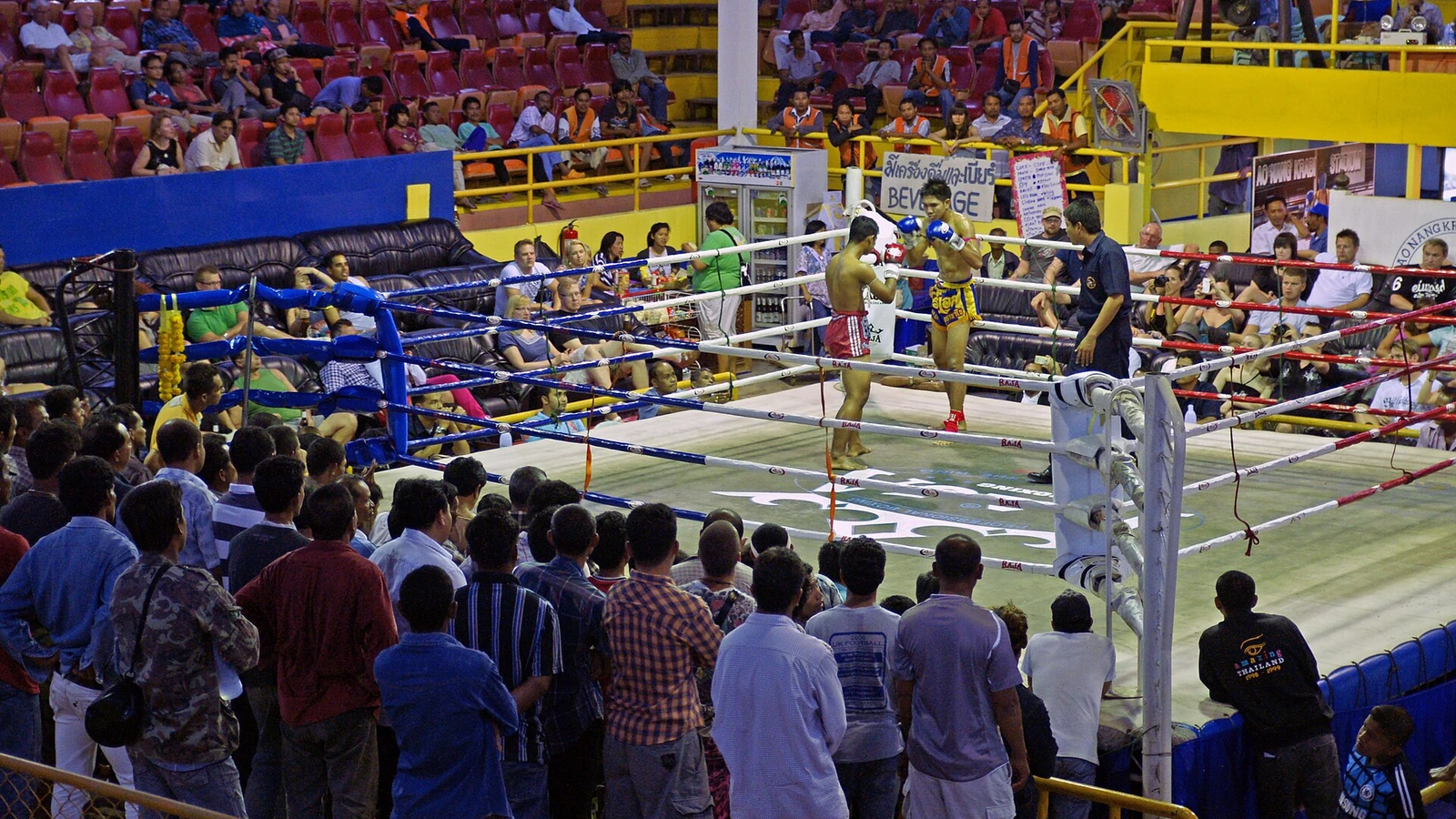
That is the useful distinction. Private training is not automatically more authentic, more serious or even harder. A good one-to-one session can be slowed down so your stance, balance and guard are corrected before fatigue makes everything messy. A group class gives you something private training cannot fully reproduce: shared warm-up, pads, bags, conditioning and the feeling of moving through a gym session with other trainees.
If you have not yet decided whether you want to train at all, start with the separate Muay Thai class vs fight-night guide. This page assumes the answer is already: I want to try Muay Thai.
Ask one question: what do you want the coach watching?
Punch It Gym in Lamai currently separates public beginner classes from advanced and fighter sessions. Its official schedule says the beginner sessions are designed for first-time students and people with little or no Muay Thai experience, with an emphasis on correct technique, basic movement and confidence. That matters because it removes a common false premise: a properly labelled beginner group is not a class you need to be “good enough” to enter.
Yodyut Muaythai in Choeng Mon likewise says its group training is open to all abilities, while its private sessions are tailored to the trainee's skill, fitness and goals. PM Payu near Fisherman's Village currently offers both structured group classes and one-to-one sessions, describing private training as the place for more direct work on technique, fitness or a specific goal.
The first ten minutes feel different in each format
Private: the coach finds your errors immediately
You do not get to hide in the line. That is good if you want useful correction from one holiday session. Your stance, foot placement and balance can be adjusted before you repeat the same mistake for an hour.
It can also feel intense if you are self-conscious. The session is centred on you, so there is less social camouflage and less downtime while someone else takes a turn.
Group: you learn the room before the room learns you
You can watch the drill, copy the pattern and settle into the gym's rhythm. A group session gives you more reference points: other beginners miss combinations too, everyone gets tired, and perfect coordination is not the entry requirement.
The trade-off is obvious: the trainer's attention is divided. If one technical detail is the reason you booked Muay Thai, you may leave wishing someone had watched it more closely.
Private is worth more when your body needs a conversation
Private training has a practical advantage that has nothing to do with status. PM Payu's current first-party guidance says a private session can be kept technical and controlled or made more intense depending on level and goal. Yodyut similarly describes private training as tailored to skill and fitness.
That makes one-to-one coaching the more sensible format if you need to explain an old knee issue, poor shoulder mobility, low current fitness or simply a strong preference not to push through a drill you do not understand. It does not turn a trainer into a doctor. If you have an injury or medical concern that makes striking exercise questionable, get appropriate medical advice rather than expecting the coach to diagnose it.
On the other hand, do not buy private because you assume it will be easier. One-to-one pad work can be demanding because the session does not need to wait for the rest of a class. Tell the trainer what you want: technique, a holiday workout, or both.
Your hotel base changes which format is convenient, but it should not choose the format for you
The broader rule is the same as with organised boat days: your accommodation should serve the trip you repeat, not one isolated pickup. The hotel-location-for-day-tours guide explains that logic in more detail. If your main question is simply whether Bophut's evenings or Maenam's quieter rhythm suits you, keep that decision in the Bophut vs Maenam guide instead of letting a single training hour dominate it.
A new bookable stadium option changes the logistics more than the coaching decision
A current GetYourGuide listing from Samui International Muaythai Boxing Stadium & Gym now offers a one-hour training session with a choice of private or group format and hotel pickup/drop-off on Koh Samui. The listing says gloves and training equipment are provided and asks guests to bring sportswear and a change of clothes.
That is useful if the hardest part of the decision is not the gym itself but getting there and back. It is especially relevant if you are on a short stay, do not want to arrange a separate ride while sweaty, or are not based close to Lamai, Choeng Mon or Fisherman's Village. Samui International Muay Thai Stadium's own site places the stadium and gym in Chaweng.
But hotel transfer does not make private automatically better. Decide the coaching format first; then decide whether a bundled transfer is worth simplifying the day. If you are still sorting your first ride on the island, the Samui Airport to Chaweng/Bophut guide solves that separate transport question.
Already decided to train? Compare the private and group options in the same booking
The current stadium product offers both formats for a one-hour session and includes Koh Samui hotel pickup/drop-off. Use it when the transfer is part of the value; if you prefer a specific local gym, book that gym directly instead.
Compare the training formatsIf you are training with a partner or friend, “private” can become a third format
A couples trip does not force you into either a public group or two separate one-to-one lessons. Some gyms offer private small-group training. The useful catch is skill mismatch. Punch It currently says additional people sharing a private lesson should be at the same level; otherwise it advises booking two trainers. PM Payu similarly says its private small-group format works best when participants have similar levels and goals.
That is sensible beyond Muay Thai. If one person wants a technical lesson and the other mainly wants a fun workout, paying for one shared private session can make both people compromise. A public beginner class may actually feel more relaxed because nobody expects the pair to move at the same pace.
For couples planning several off-property activities, this is also an opportunity-cost question. A private-pool stay can lose value quickly if every morning gets filled with bookings; the private-pool-villa vs beachfront-room guide is useful if the hotel itself is meant to be part of the holiday.
For solo women, think about the thirty minutes after training
The class itself is usually the easy part of the logistics. The awkward bit is leaving hot, sweaty and carrying a phone, room key and valuables while deciding whether to change, shower later or get straight into a ride.
Bring a dry top or light layer, keep valuables in one small zipped pouch rather than scattered around a gym bag, and confirm what equipment is supplied before leaving the hotel. Do not assume every venue has the changing or shower setup you want unless the operator says so. If you use a bundled hotel transfer, confirm the pickup details in advance; if you arrange your own return, set the exact gym pin while you still have battery and data.
A morning class can be easier if you want the rest of the day open. An evening class can work too, but think about the final route back to an isolated resort entrance in the same way you would when comparing Chaweng Noi with central Chaweng.
Group training is the stronger choice when the atmosphere is part of why you came
If you want to understand how a Muay Thai gym moves as a room, group training gives you more of that texture. Yodyut's official description of a typical group session includes warm-up, shadow boxing, pad work, bag work, technique, sparring or clinching depending on the session, and conditioning. PM Payu describes its group classes around pad work, technique and conditioning. Punch It separates beginner sessions so first-timers are not simply dropped into its advanced class.
That does not mean every group class contains every element or that a visitor should expect to spar. Ask the gym what is appropriate for a first session. The point is that group training is a shared training environment, not a cheap imitation of private coaching.
If you mainly want a recovery experience rather than another sweaty activity, do not force Muay Thai into the trip. Compare the energy cost with a yoga class or wellness half-day, or keep the next day lighter with a massage rather than a long spa block.
Use this four-signal decision ladder
- Choose private if the value is immediate technical correction: stance, balance, guard, one strike or one combination you actually want a trainer to watch.
- Choose private if pacing needs to be adapted around your fitness, confidence or a limitation you have already decided is safe to train with.
- Choose group if you want the social gym rhythm, are comfortable following shared drills and would enjoy seeing other beginners learn alongside you.
- Choose group if you are mainly there for a memorable holiday workout and do not have a specific technical problem you need one-to-one time to solve.
There is no prize for choosing the more expensive format. There is also no special authenticity in choosing the group if you spend the whole hour wishing someone would correct your feet.
The cleanest booking rule
Book private when you can name what you want corrected. Book group when what you want is to join the training. If you cannot name a technical or pacing reason for one-to-one coaching, a genuine beginner class is usually the better first experiment.
Then keep the rest of the trip coherent. One training session can sit comfortably beside a food evening, beach day or offshore trip; it does not need to become a theme holiday. Continue through the Koh Samui destination hub or browse the Koh Samui experience decisions before adding another fixed booking.